 Voice of customerVoice of customer methodologies: twelve ways to ask, one way to readTwelve voice of customer methodologies sorted into asking and listening, what each is for, and the one job they all share: reading the feedback well.
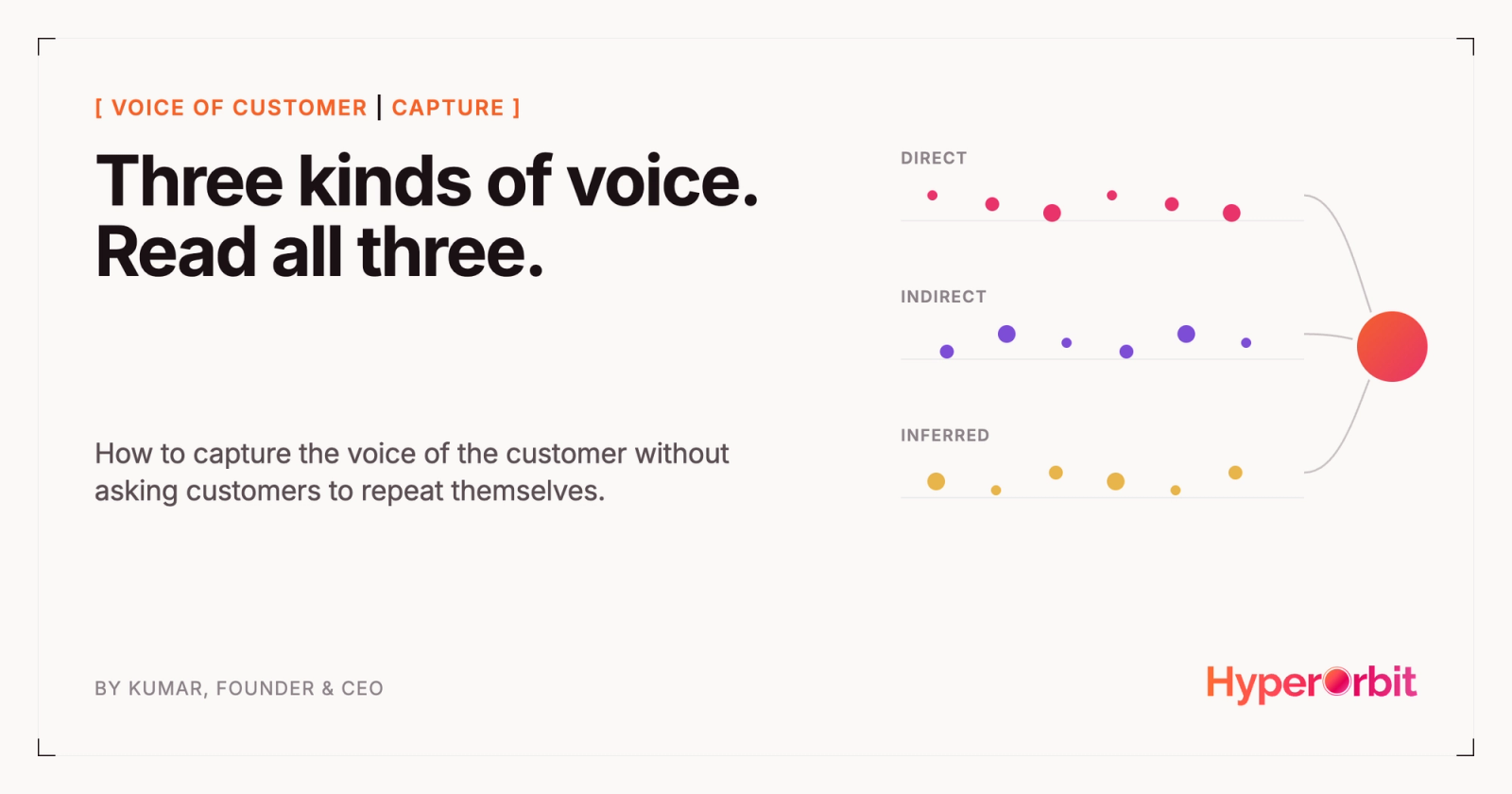 Voice of customerHow to capture the voice of the customer: direct, indirect and inferredThe three kinds of customer voice, why most programmes over-invest in asking, and how to capture what customers already say and do without making them repeat themselves.
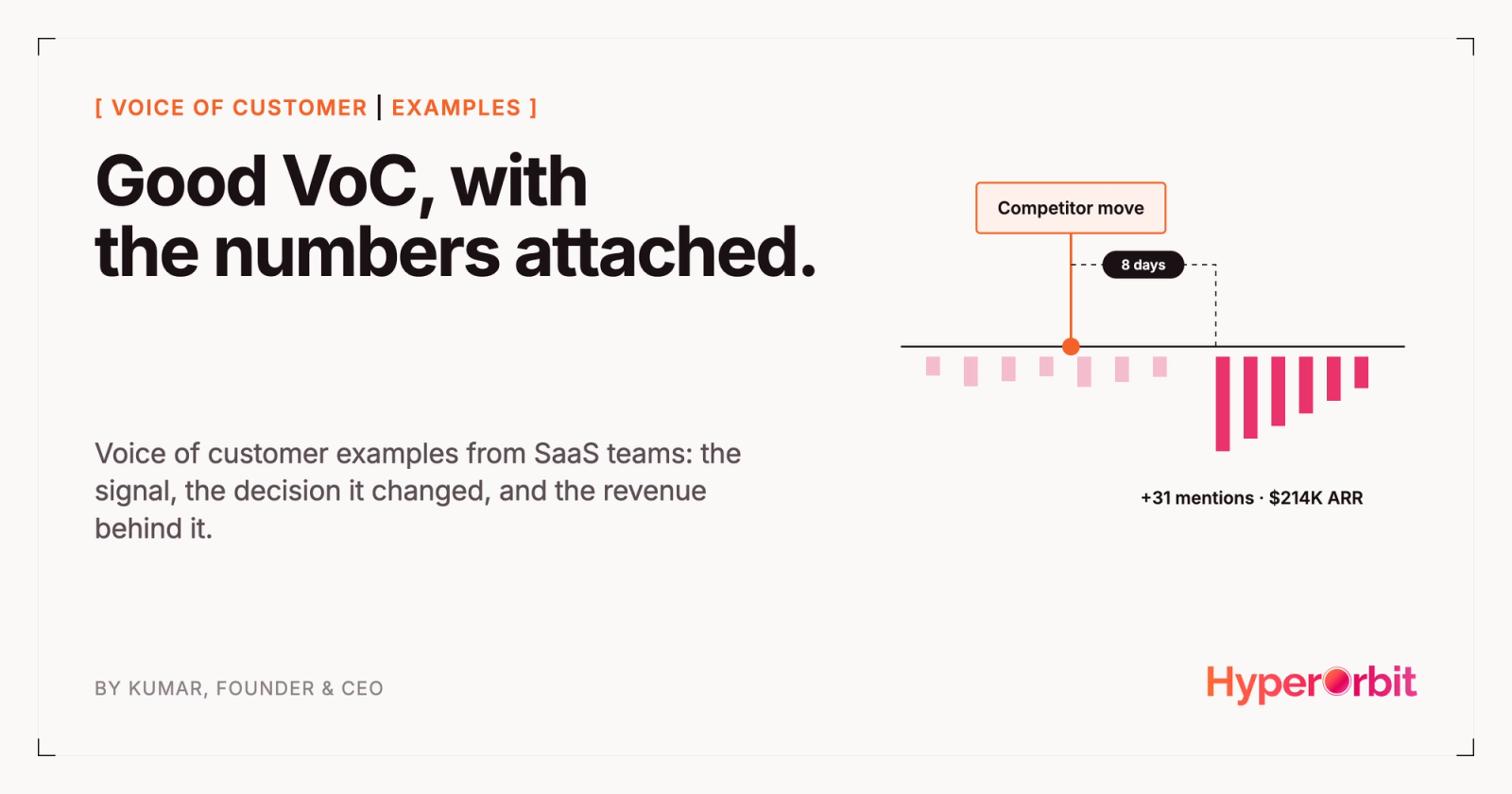 Voice of customerVoice of customer examples: what good looks like, with the numbers attachedFive patterns from voice of customer programmes that work, each with a worked example: the signal, where it came from, the decision it changed and the revenue behind it.
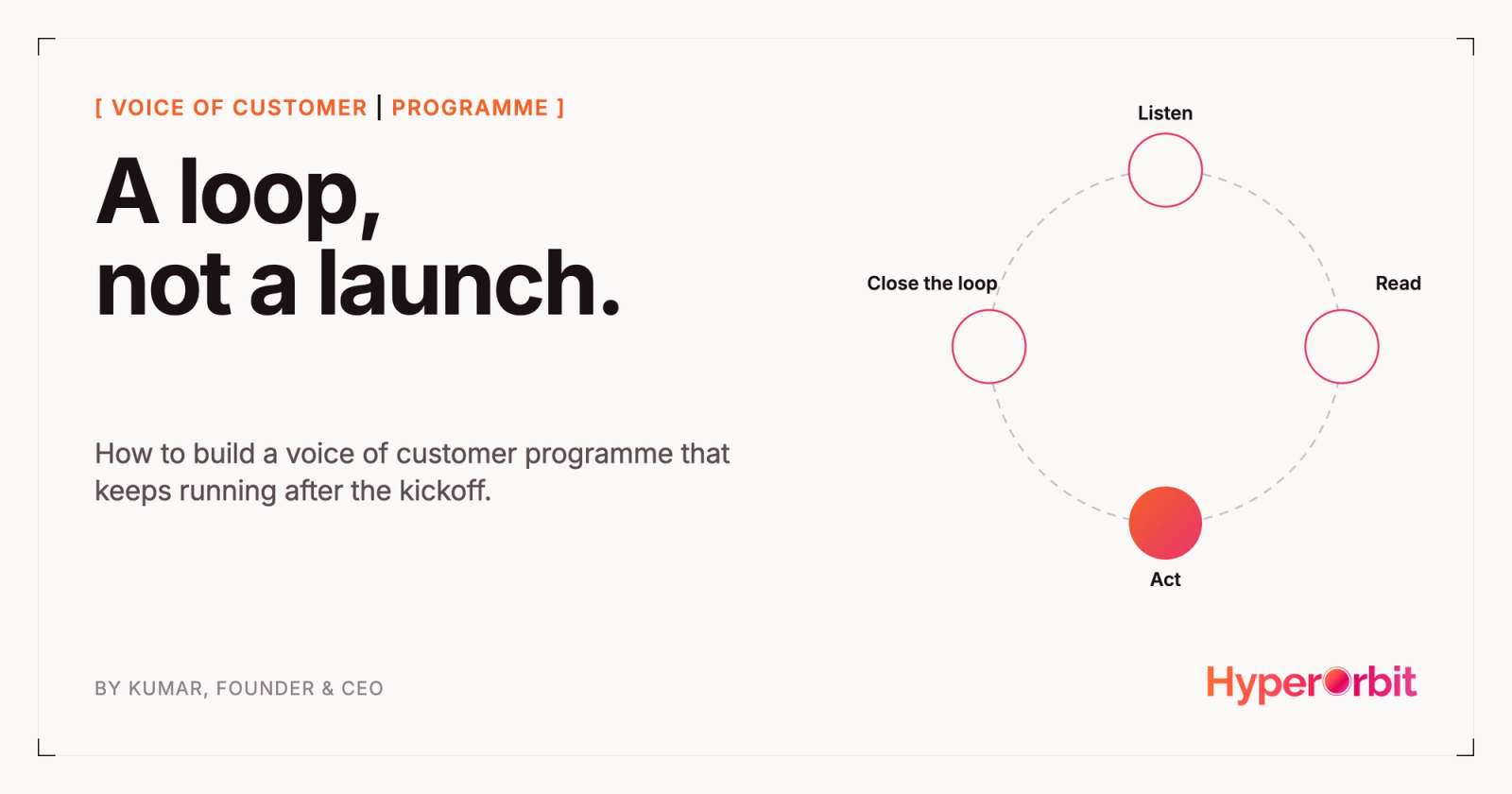 Voice of customerHow to build a voice of customer programme that outlasts the kickoffThe eight steps of a voice of customer programme, rebuilt as a loop: decide the decisions first, connect the sources you already have, read nightly, rank by revenue, own every theme.
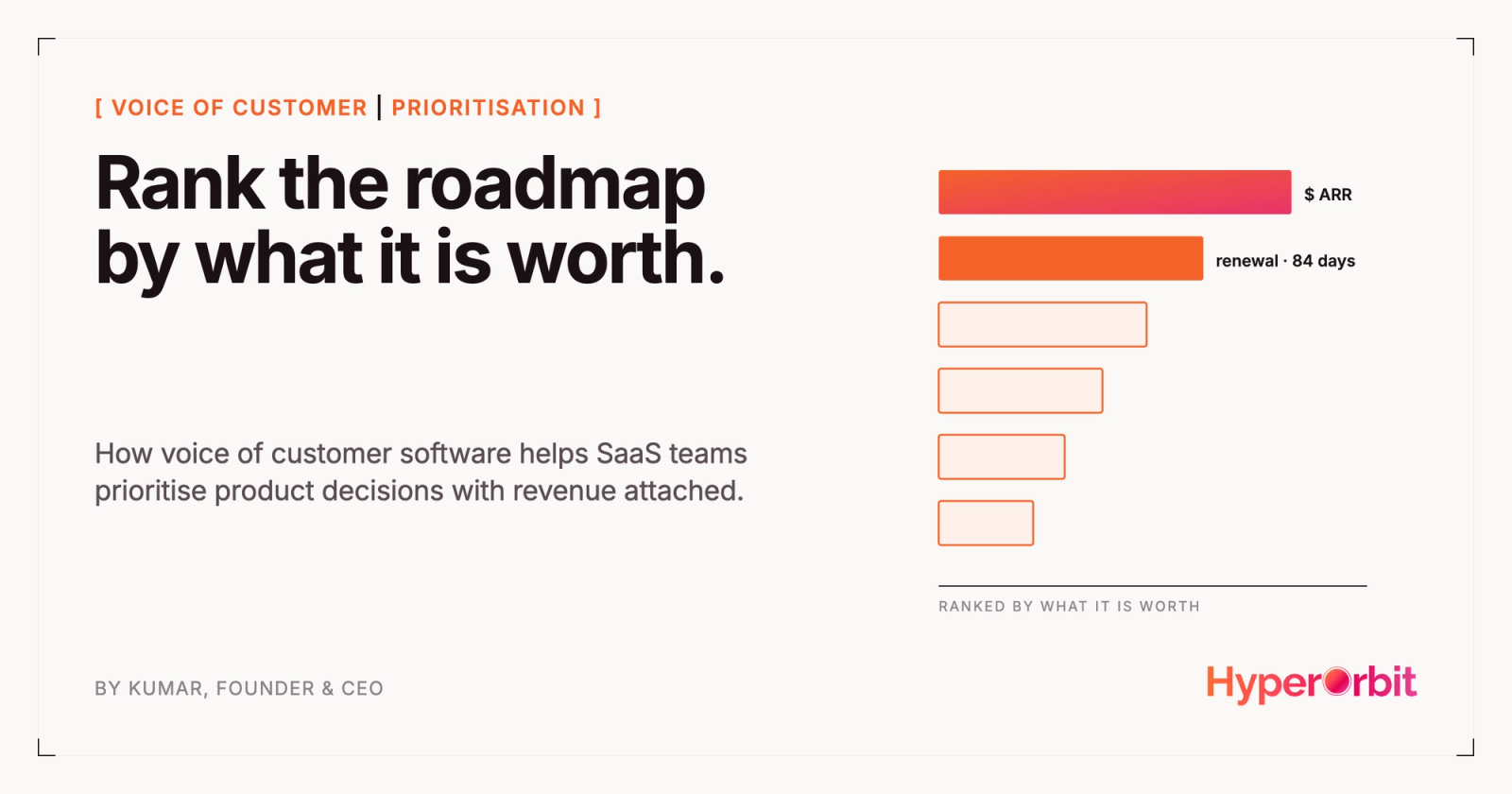 Voice of customerHow voice of customer software helps SaaS teams prioritise product decisionsHow voice of customer software turns scattered feedback into a ranked roadmap: themes by intent, the accounts and ARR behind them, the cause, and a drafted fix held for the PM.
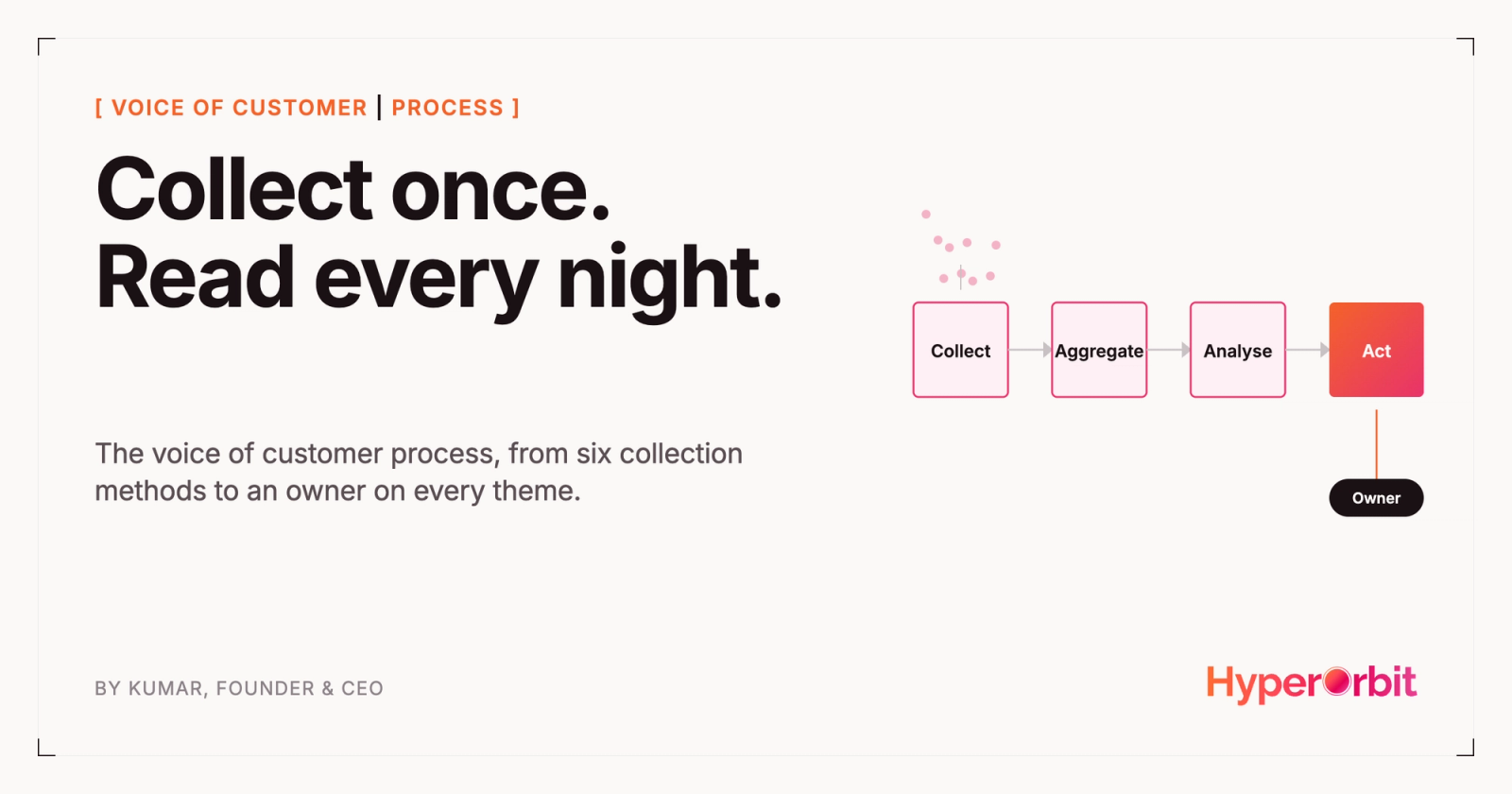 Voice of customerThe voice of customer process: collect once, read every nightA practical guide to the voice of customer process: six ways feedback arrives, four layers from collection to activation, and what changes when the read is nightly.
 Competitive intelligenceCompetitive intelligence: definition, types, sources and how to run it in 2026What competitive intelligence is and is not, strategic versus tactical, who uses it, the sources including the one most programmes skip, a six-step process, the tools, and what changes in 2026.
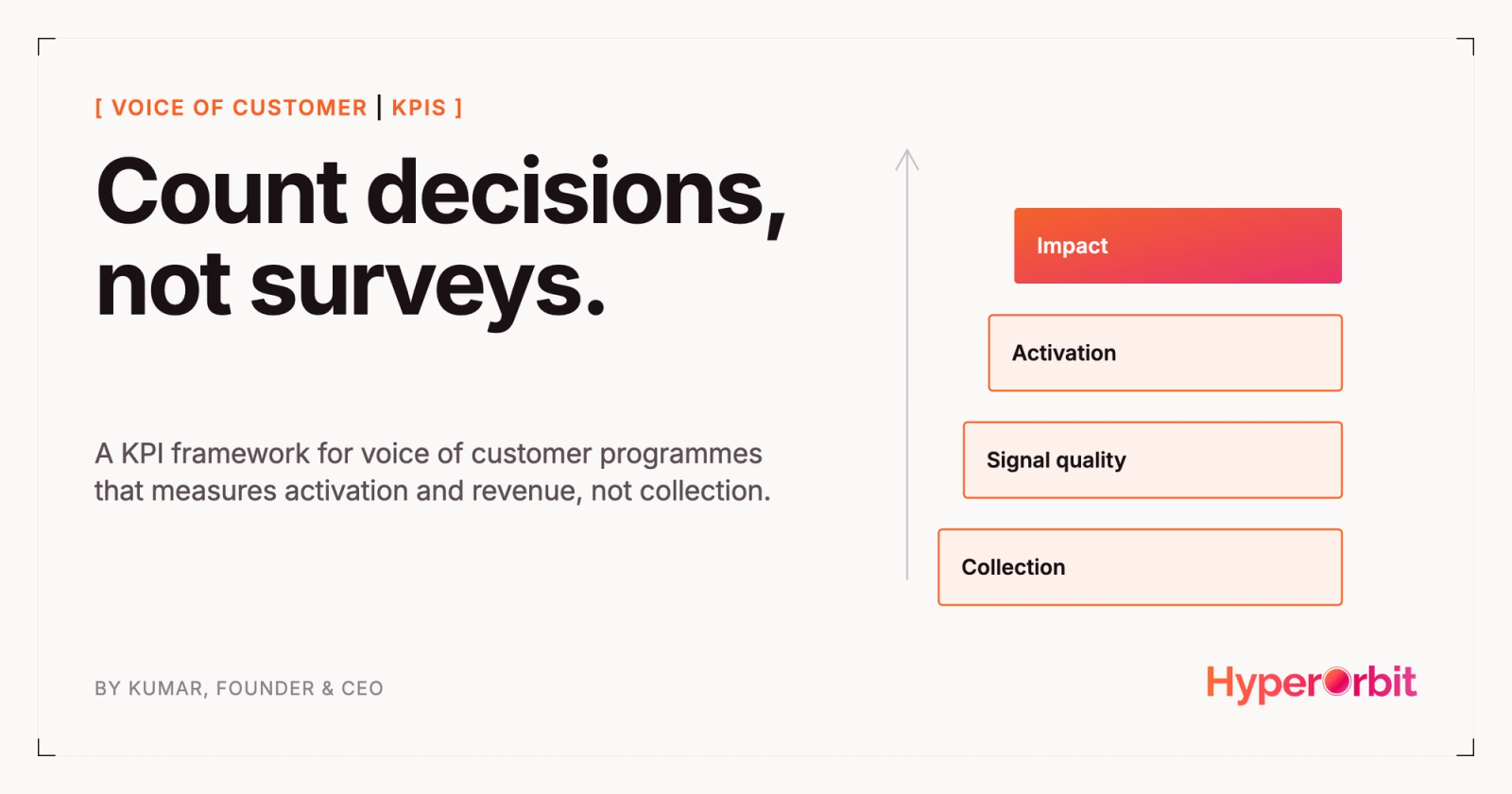 Voice of customerVoice of customer KPIs: count decisions changed, not surveys answeredA four-layer KPI framework for voice of customer programmes: coverage instead of response rates, signal quality, activation with an owner, and impact measured in ARR and renewals.
 Competitive intelligenceCompetitive intelligence statistics: the numbers that matter are your ownIndustry statistics prove competitive intelligence is a category. They cannot change your plan. The four numbers from your own signal that can: detection lag, reaction lag, revenue touched, time to counter.
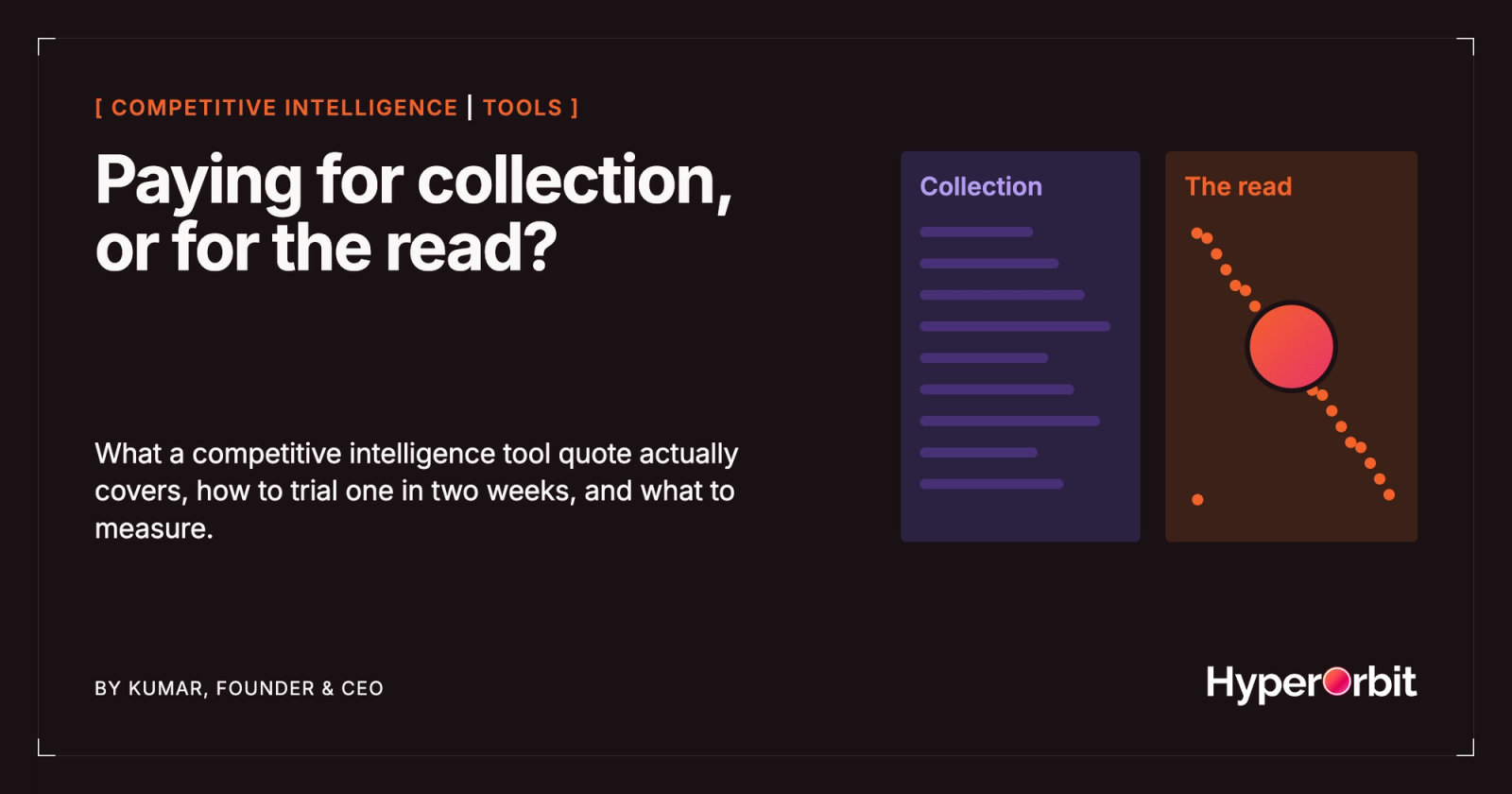 Competitive intelligenceCompetitive intelligence tools: what you are actually paying forCompetitive intelligence tool quotes cover collection; the read is what costs you hours. What a quote should include, how to run a two-week trial, and how to compare candidates.
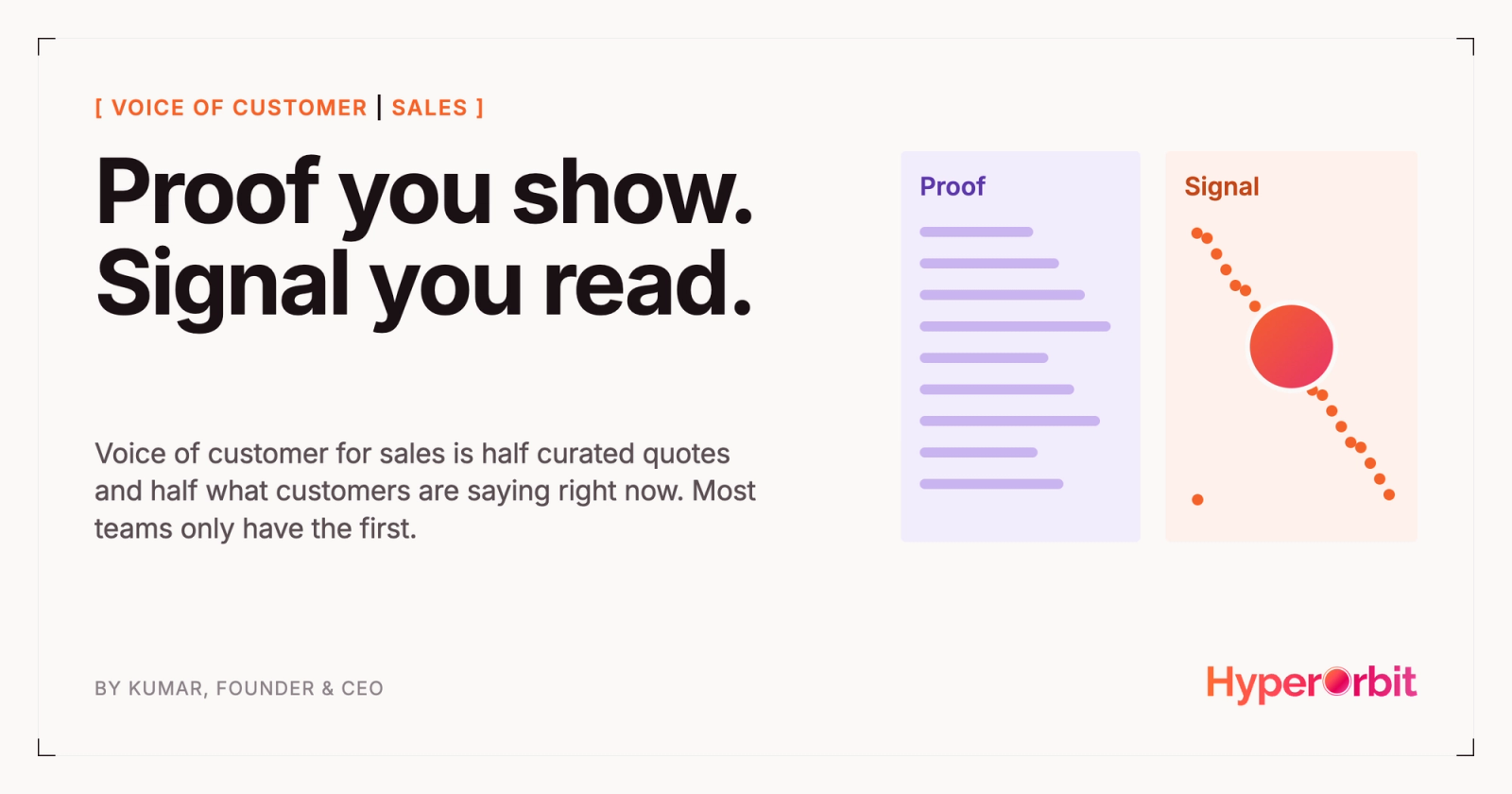 Voice of customerVoice of customer for sales: the proof you show and the signal you readSales teams use voice of customer as proof: quotes, references, case studies. The other half is signal, what customers are saying right now, and it rarely reaches the rep.
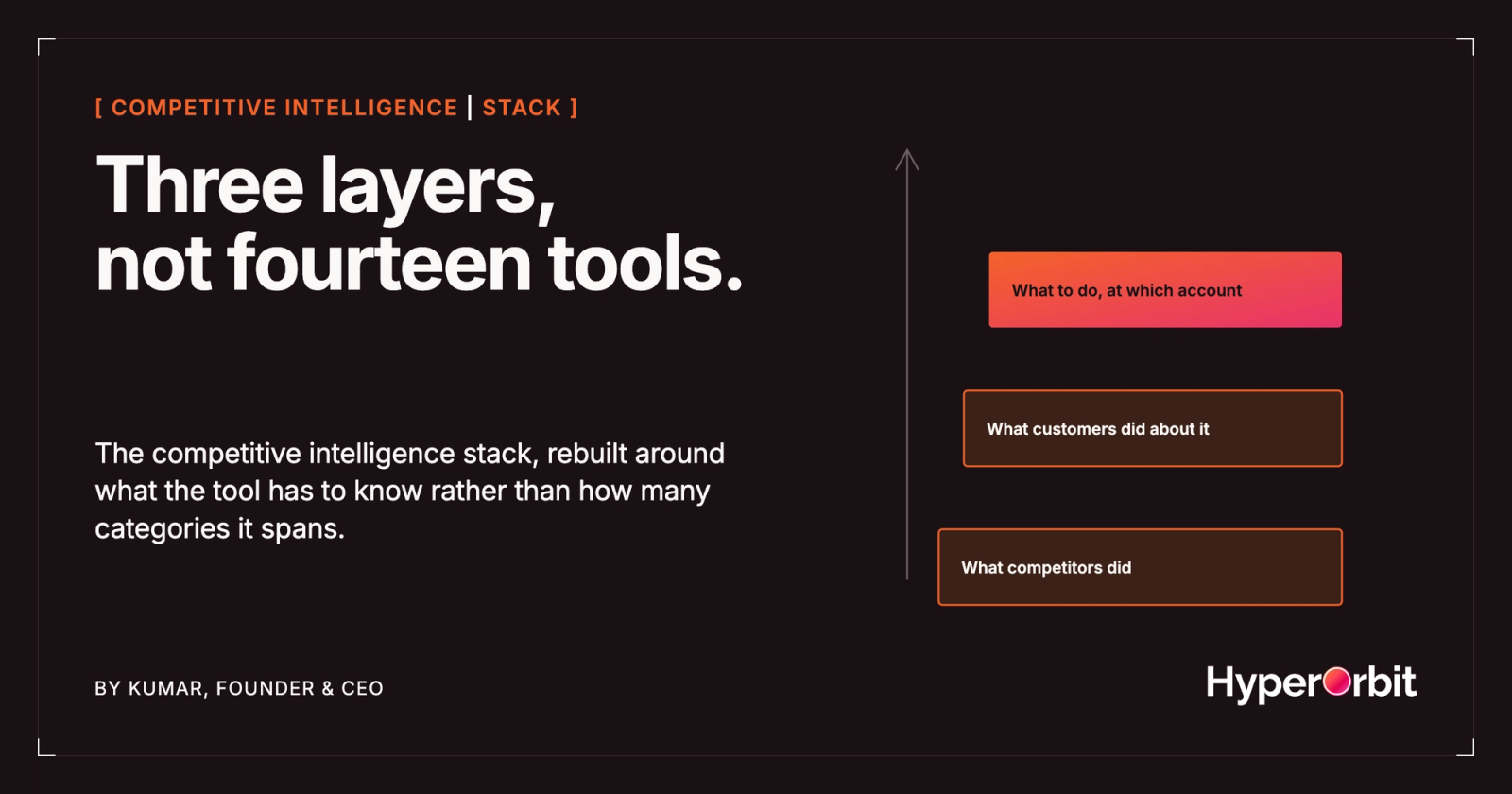 Competitive intelligenceThe competitive intelligence stack: three layers, not fourteen toolsAnalyst lists say you need a stack of a dozen intelligence categories. A SaaS team needs three layers: what competitors did, what your customers did about it, and what to do at which account.
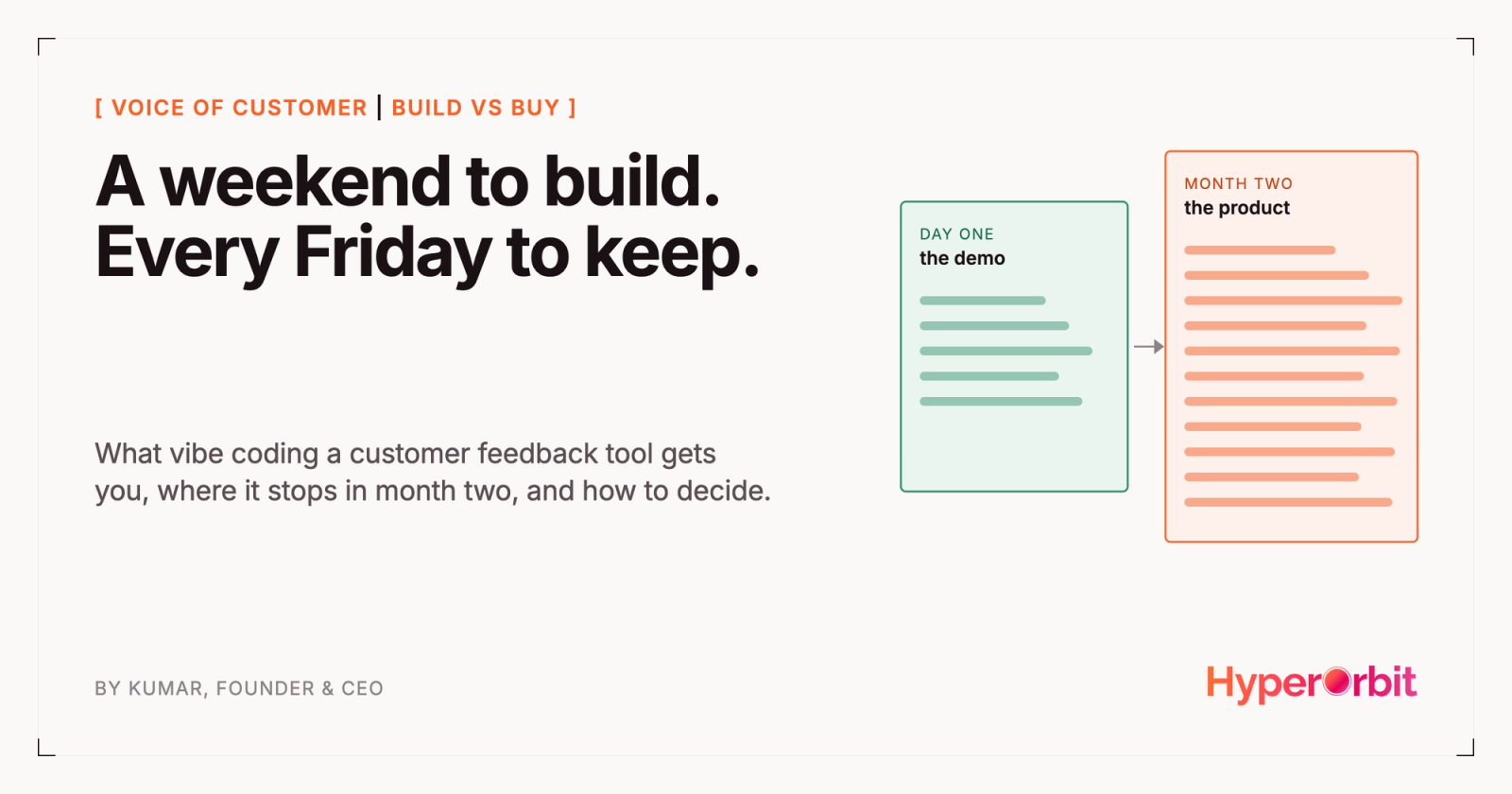 Voice of customerBuild or buy a voice of customer tool? What vibe coding gets you, and what it doesn'tA PM can vibe-code a feedback analyser in an afternoon. Here is what the weekend build does well, where it stops in month two, and how to decide whether to keep it.
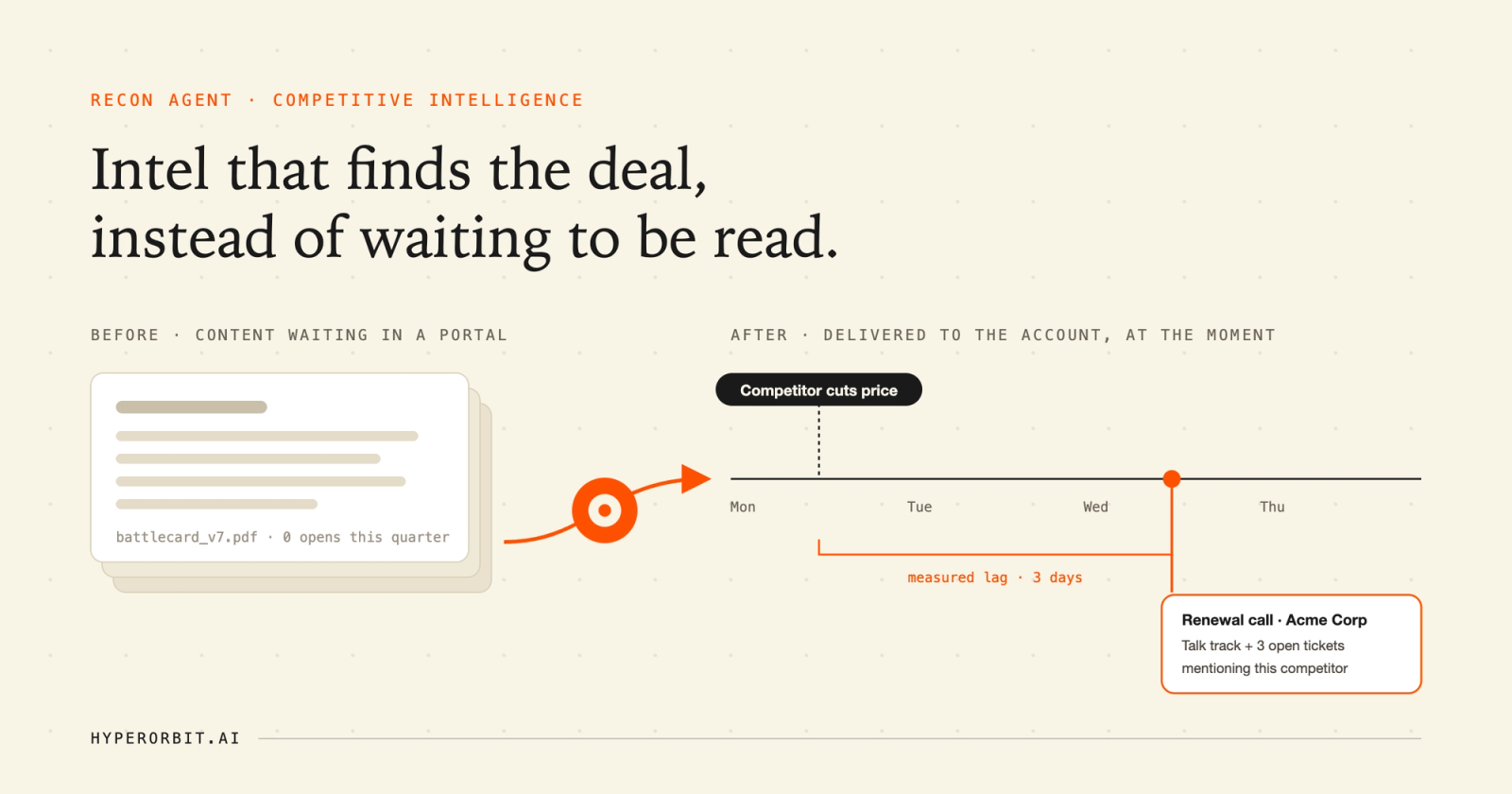 Competitive intelligenceWhy your reps don't read competitive intel, and why they shouldn't have toCompetitive intel adoption is low because intel is built as content for humans to read. HyperOrbit's view: route it to the account and the moment instead.
Voice of customerTop features to look for in voice of customer software (2026 buyer's guide)Choosing voice of customer software? Here are the features that matter, from multi-channel ingestion to revenue context, plus questions to ask in every demo.
Competitive intelligenceBuild or buy competitive intelligence? The question hides a third optionA scraper and a model now build a competitor monitor in a weekend, and tracking platforms distribute it better. Both stop at what competitors did. The deal is decided one layer up.
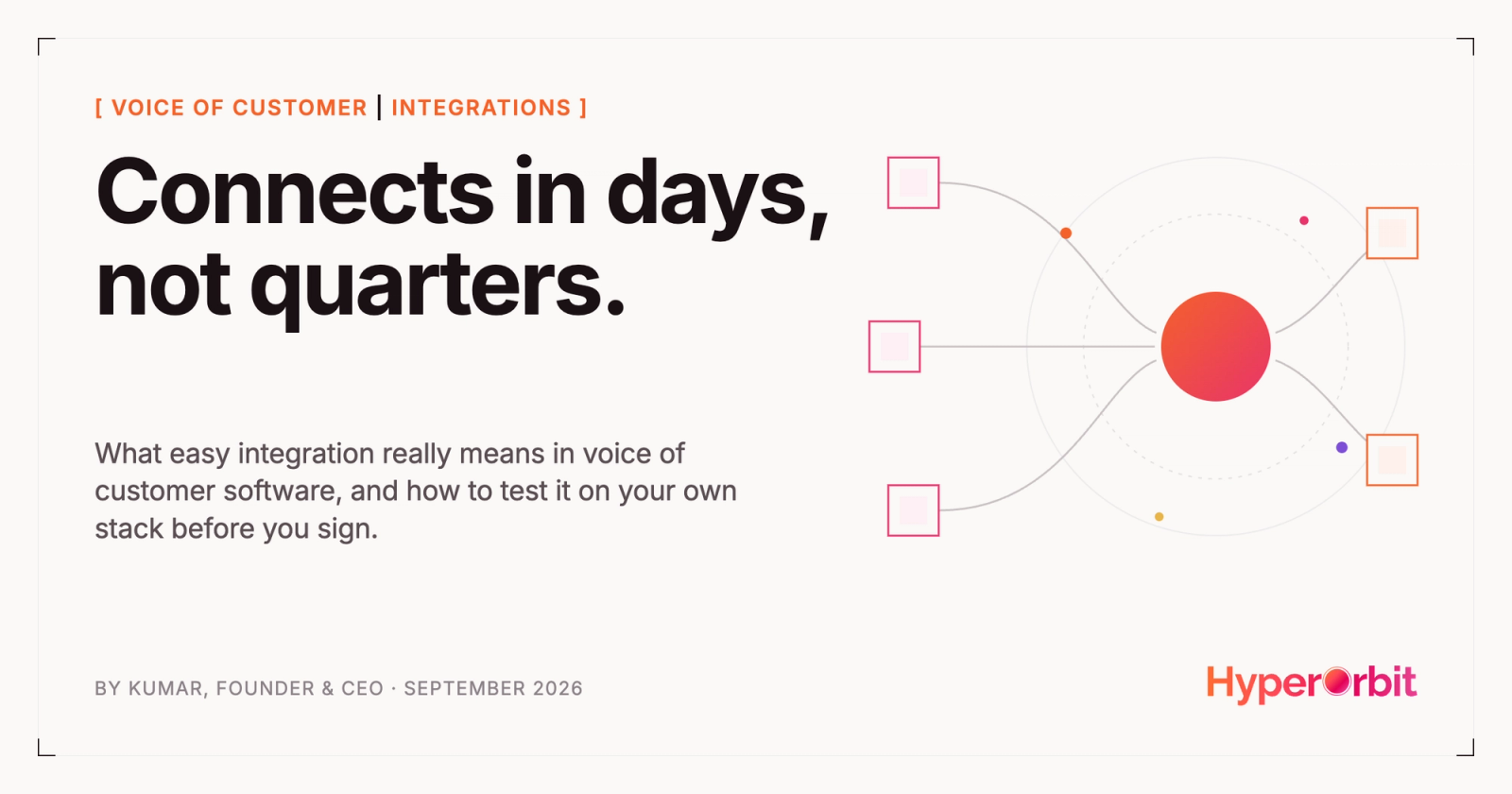 Voice of customerVoice of customer software with easy integration: what to look forMost VoC projects stall at setup. Here is what easy integration really means in voice of customer software, and how to test it before you sign.
 Customer intelligenceHyperOrbit joins NVIDIA Inception and is named an AI startup to watchHyperOrbit is now a member of NVIDIA Inception, NVIDIA’s programme for AI-native startups, and has been recognised as an AI startup to watch. What that means for the agents, and for the teams that rely on them.
See the agents on your own sources.
A 30-minute walkthrough. The first read lands before your next standup.