When sales teams talk about voice of customer, they usually mean proof: the quote on the slide, the reference call, the case study with a logo on it. Proof matters. A buyer who has just heard "we had the same problem" from a peer is easier to move than one who has heard it from a rep. And the discipline around proof has rightly tightened: real customers, consent on record, claims you can trace.
But proof is half of the customer's voice, and it is the half that has been curated. The other half is what customers are saying right now, unprompted, in tickets, calls, reviews and churn surveys. That half is rarely in front of a rep, and it is the half that tells them what to say on Thursday to the account in front of them.
Two kinds of voice, two jobs
Proof is outward-facing. A happy customer agreed to say something, someone verified it, and it lives in a library for reps to pull. It is refreshed by asking customers again. Its job in a deal is trust.
Signal is inward-facing. Nobody was asked. It is the support ticket from an account up for renewal, the G2 review that mentions a competitor, the pricing objection that came up on four calls last week. It refreshes itself every night. Its job in a deal is timing and relevance: knowing which objection is coming, which competitor is in the room, and what this specific account has already told you.
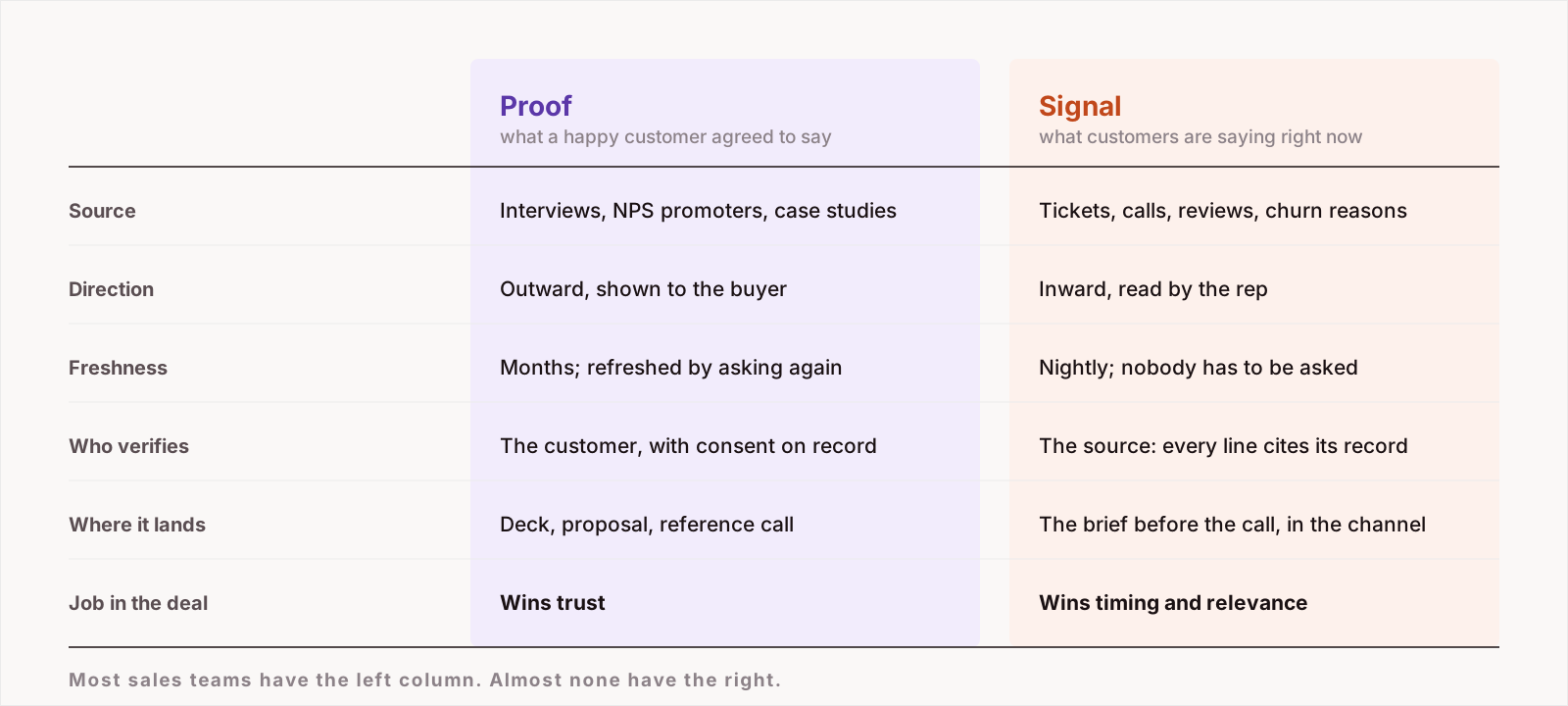
Most VoC-for-sales programmes stop at the left column. That is not a criticism of proof. It is that the right column sits in the helpdesk, the call recorder and the review sites, owned by support, product and marketing, and it never makes it to the person with the deal.
Where signal changes the deal
Take the moments where proof is usually deployed, and look at what signal adds to each.
Discovery. Proof says a peer had this problem. Signal says what people in the prospect's segment are complaining about in the incumbent's reviews this month, so the first call opens on a pain the prospect has, not one you hope they have.
Objection handling. Proof answers an objection with a testimonial. Signal tells the rep whether the objection is a trend or a Tuesday: "that is our third most mentioned theme this quarter, here is the fix, it shipped in August" is a different conversation from a rebuttal.
Competitive displacement. Proof is the switcher story. Signal is the continuous win/loss read: the decision criteria and objections already in your calls and tickets when that competitor is named, so the rep knows why you win and lose against them before the call, not after the post-mortem.
Pricing pushback. Proof reframes value with an outcome. Signal tells you whether pricing complaints are rising and why. On our methodology page the worked example is a competitor's free tier launched on 22 May and, eight days later, pricing complaints up by 31 mentions across accounts worth $214K of ARR. A rep who knows that walks into the pricing conversation knowing what caused it.
Renewal and expansion. This is where signal matters most, and where proof has the least to say. The account was fine at the QBR. Seven tickets and one review later, it was not. The account's own voice, resolved into one record and ranked by what it is worth, is the brief the account owner needs before the renewal call. Atlas, in beta, does that fusing: feedback, usage, support and CRM into one health score per account, with why it moved and a recommended play.
The handoff is a routing problem
The teams who have thought hardest about proof describe the failure correctly: feedback gets stuck where it was collected, and the handoff to sales never happens. The same is true of signal, with one difference. Proof needs a library, because a rep pulls it when they need it. Signal needs routing, because the rep does not know they need it until it is too late.
Routing means the brief reaches the account owner before the touchpoint, in the channel they already work in, with the evidence attached. In HyperOrbit that is the Signal Desk, where anything that needs a person lands with an owner, a cause and the action, and every answer cites the record it came from. Enterprise delivers into Slack, Jira, HubSpot, Intercom or Zendesk. Nobody has to remember to look.
Proof is pulled: a rep reaches for it. Signal has to be pushed: it arrives before the call, or it might as well not exist.
Keep the two apart
Signal is for preparing the rep, not for quoting to the buyer. A support ticket is not a testimonial, and a review is not a reference. Use signal to decide what to say and when; use proof, with consent on record, for what you show. Keeping the line clear protects your customers and your claims. Our commitments on how customer data is handled are on the trust and compliance page.
How to get signal to the sales floor
- Connect the sources sales never opens: the helpdesk, the call recorder, the review sites, the churn survey. Signal lives there.
- Resolve identity, so the account's tickets, calls and reviews are one record and the rep sees the account's voice, not three unrelated complaints.
- Rank by revenue and renewal proximity. A theme raised by three accounts renewing next quarter outranks one raised by fifty on the free tier.
- Route the brief to the owner before the next touchpoint, and hold anything that needs judgement for a person to approve.
Reps can start reading signal by hand today. The free Sales Intent Finder Chrome extension reads a Reddit thread for buying signals: the pain point, the current workaround and what people are asking for, each rated and linked to its source. The agents do the same job across every source you connect, every night, with the revenue attached; HyperOrbit's revenue team page shows how that looks before a deal review.
Voice of customer for sales is not only the proof you show. It is also the signal you read. Build the library, and then build the route.
Frequently asked questions
What is voice of customer for sales?
Using what customers say to move deals. It has two halves: proof, the consented quotes, references and case studies shown to buyers, and signal, the unprompted feedback in tickets, calls, reviews and churn surveys that tells a rep what is coming and what a specific account has already said.
How is signal different from proof?
Proof is curated and outward-facing, refreshed by asking customers, verified by consent, and pulled from a library. Signal is unfiltered and inward-facing, refreshed nightly, verified by the source record, and has to be routed to the rep before the call.
Where does customer signal change a deal?
In discovery, by opening on the pain the prospect's segment actually has; in objection handling, by knowing whether an objection is a trend; in competitive displacement, through a continuous win/loss read; in pricing pushback, by knowing what caused the complaints; and in renewals, where the account's own tickets and reviews are the brief.
Should reps quote support tickets to buyers?
No. Signal prepares the rep; proof is what you show. A ticket is not a testimonial and a review is not a reference. Keep proof consented and traceable, and use signal to decide what to say and when.