Competitive intelligence is the practice of gathering and reading information about competitors, customers and the market, and using it to make better decisions than you would have made without it. The definition is old and still right. What has changed is the speed at which competitors move, the amount of public data about them, and the fact that the most useful information about a competitor is now, very often, sitting in your own support queue. This guide covers the whole practice as it stands in 2026: what it is, the two kinds, the sources, a six-step process, the tools, and what changes when the read is daily.
Competitive intelligence, and what it is not
Business intelligence reads your own operational data. Market research asks customers questions. Competitive intelligence reads what competitors do and what customers say and do in response, from sources that already exist. It is legal, public and continuous; the moment it involves anything a competitor did not publish or a customer did not say, it has become something else.
Two kinds
Strategic competitive intelligence serves decisions with a horizon of quarters or years: which markets to enter, which categories are converging, who is likely to be acquired. It reads funding, hiring, partnerships and positioning over time.
Tactical competitive intelligence serves decisions with a horizon of days: the pricing change a rep will meet on Thursday, the feature launch a product manager should answer this sprint, the packaging move that explains a spike in churn reasons. Most of the value in a SaaS company, and most of the failures, are tactical, because the window is short and the standard monthly review misses it.
Who uses it, and for what
- Product marketing turns competitor moves into positioning and battlecards; the product marketing page shows the daily read.
- Revenue needs to know which competitor is in the room before the call and which accounts a move exposed; that is the revenue team read.
- Product uses competitor releases to time its own, and competitor reviews to find gaps worth filling.
- Customer success watches for competitor mentions inside renewal windows, which are the earliest churn signal there is.
- Strategy reads the slow signals: funding, hiring, markets entered.
The sources, and the one most programmes skip
The competitor's footprint. Websites, pricing pages, changelogs, release notes, job posts, funding announcements, conference talks. Public and sweepable; Recon reads sites, changelogs, pricing pages and reviews every day.
Review sites. G2, Capterra and the app stores carry what a competitor's customers say about them, in their own words, including why they switched and what they miss.
Third-party data. Firmographics, technographics, headcount and hiring trends from data providers, for the strategic read.
Partners and suppliers. What integration partners see, and who they are building for next.
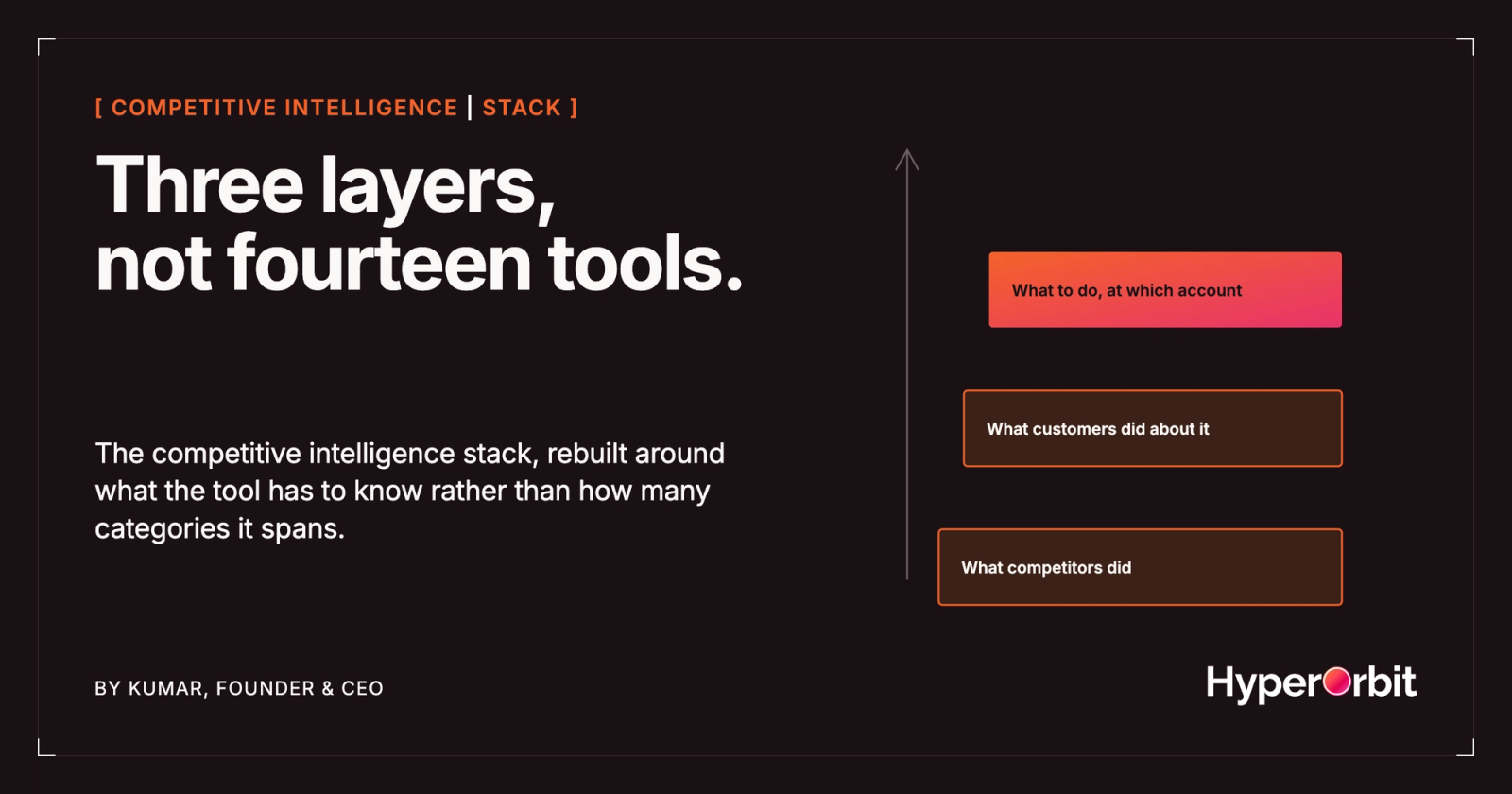
Your own customers. This is the source most programmes skip and the one that makes the rest useful. Every competitor mention in your tickets, calls, reviews and churn reasons is competitive intelligence attached to a named account and its revenue. It is the difference between knowing a competitor cut its price and knowing which of your accounts noticed. We described the split in build or buy competitive intelligence as three layers; this source is layer two.
A six-step process
- Decide the decisions. Which pricing calls, roadmap bets, deals and renewals should intelligence change? A programme aimed at "awareness" cannot be measured.
- Name the competitors and the sources. Recon tracks the competitors you name across their sites, releases, funding and reviews and ranks the pressure each puts on you; Enterprise tracks up to five across sources.
- Collect continuously. Daily sweeps, every new record read in full, deduplicated, timestamped and classified, critical moves flagged first. A monthly review is a sample.
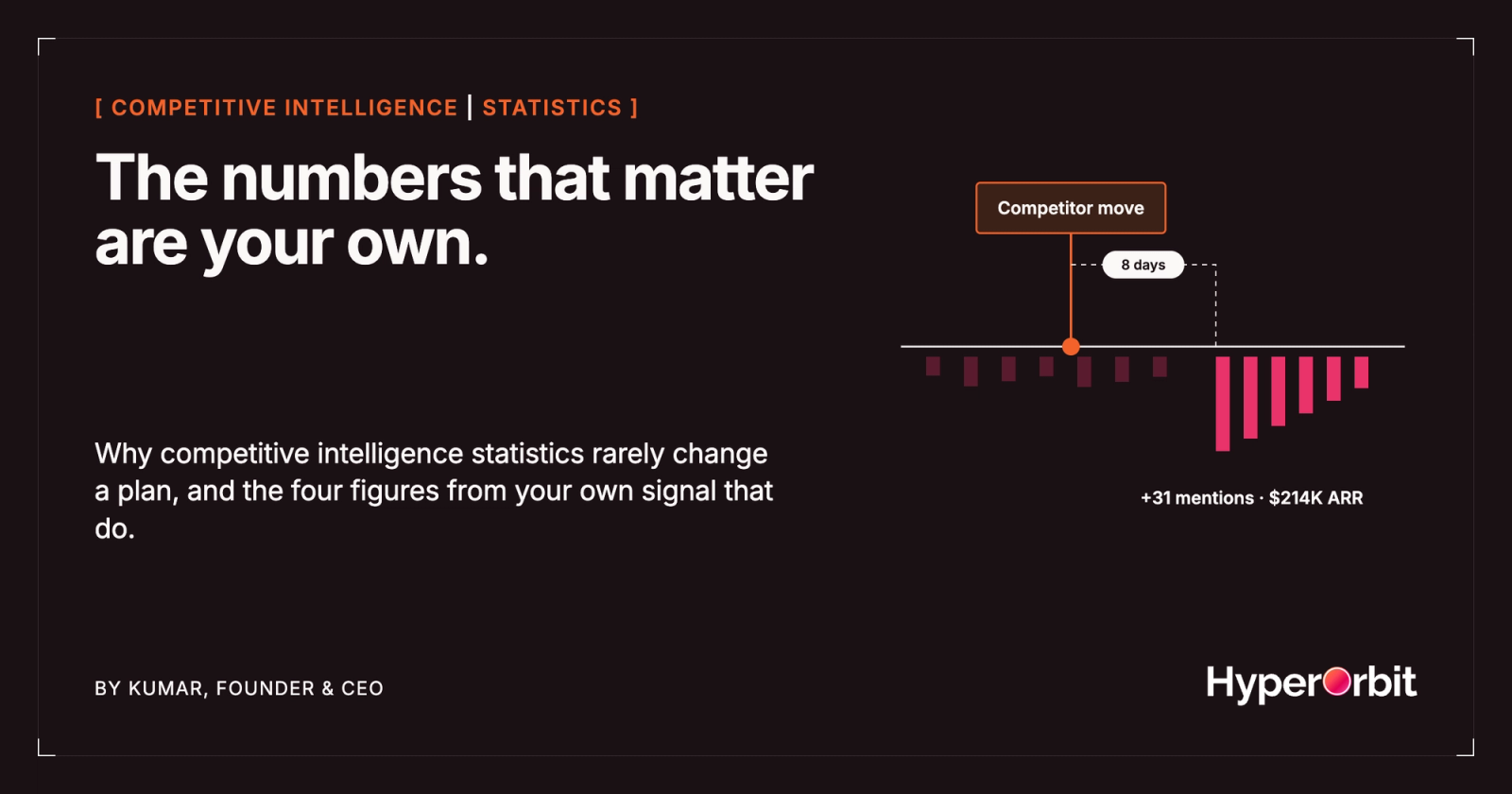
- Score by pressure, and attach the reaction. A move is ranked by what it does to you, not by how loud the announcement was, and it arrives with what your customers did about it: the mentions, the lag and the ARR. Cause and Effect puts both on one timeline.
- Draft the counter, hold it for a person. For each critical move, a battlecard with the evidence and a confidence score, held for review, then routed to the account owner before the next touchpoint.
- Measure decisions, not adoption. Moves detected and the detection lag, the reaction lag, the ARR touched, and the time to counter. Battlecard views measure who read a document.
Competitive intelligence is reading what competitors do and what your customers do about it, on one timeline, and getting the counter to the right account before the next conversation.
The tools
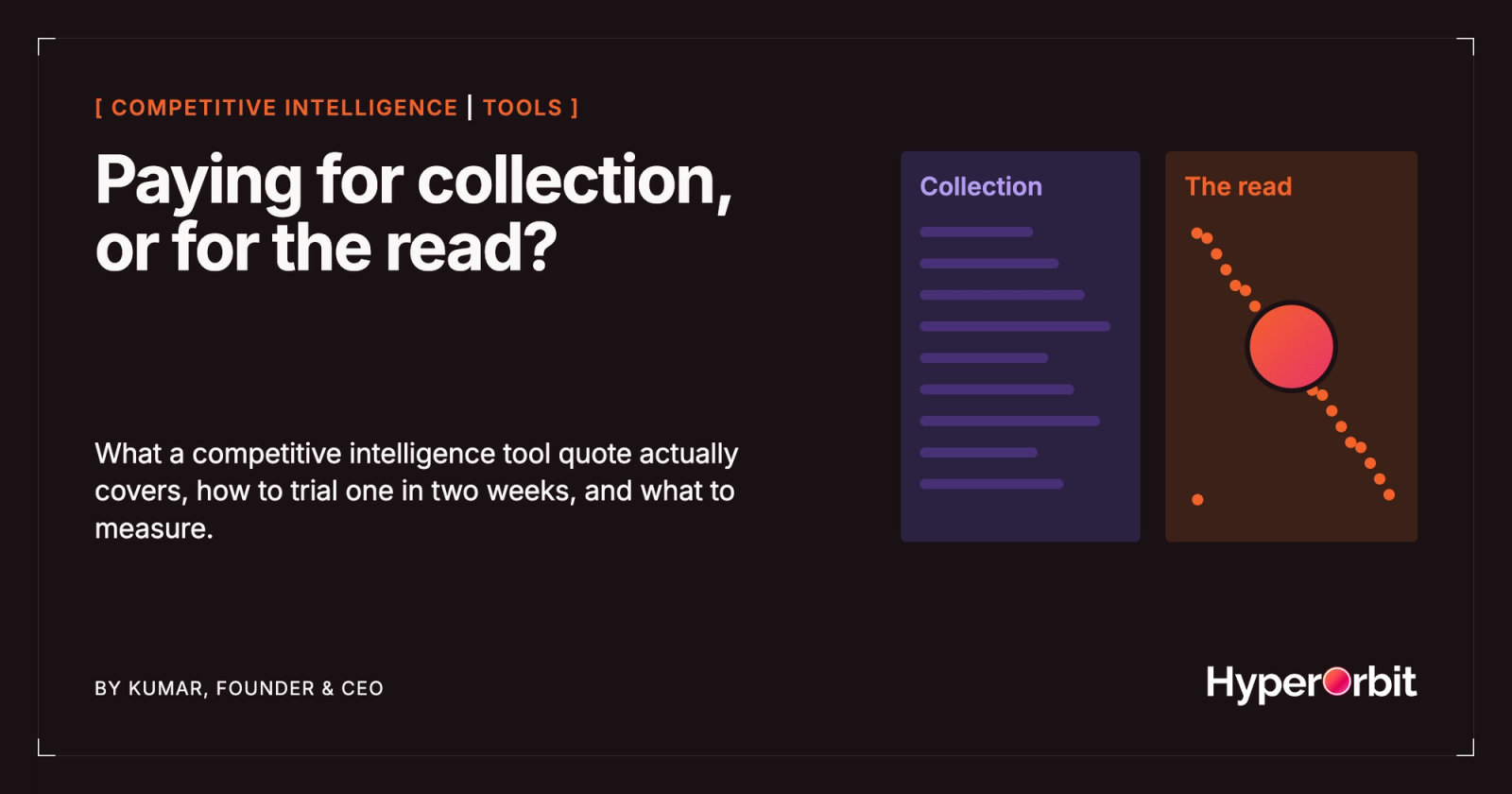
Free alerts and review sites cover collection for a small team. Monitoring and enablement platforms add coverage, scoring, battlecards and push delivery; our ranked list compares six on the same dimensions. Agents on a shared signal layer add the source most tools skip: Recon reads competitors, Chorus reads your customer feedback, and Atlas watches accounts, so a move arrives with the reaction and the revenue attached, and the Signal Desk answers a question across all three with the signals cited. Choosing among them is mostly a question of which layer you need; the stack post sets that out.
Counterintelligence, briefly
Everything above applies to you as a target. Your pricing page, changelog, job posts and reviews are being read by the same kinds of tools. Publish deliberately, keep internal roadmaps internal, and run the sweep on yourself once a quarter to see what a competitor sees.
What changes in 2026
Markets move at the speed of a release note, and the period between a competitor move and a customer reaction is measured in days. Our worked example puts it at eight. Periodic analysis cannot keep up with that; a daily read can. The other change is that the customer signal, the source most programmes skip, is now readable at scale: every ticket, call and review, every night, resolved to an account. Competitive intelligence without it is a news service. With it, it is a revenue function. If you want to see the difference on your own competitors, Starter runs Recon on one competitor source and Chorus on one feedback source at no cost, and the glossary defines the terms this guide uses.
Frequently asked questions
What is competitive intelligence?
The practice of gathering and reading public information about competitors, customers and the market, and using it to make better decisions. In 2026 the most useful competitor information often sits in your own support queue: every competitor mention in tickets, calls and reviews is intelligence attached to a named account.
What is the difference between strategic and tactical competitive intelligence?
Strategic intelligence serves decisions with a horizon of quarters or years, reading funding, hiring and positioning over time. Tactical intelligence serves decisions with a horizon of days: the pricing change a rep will meet this week or the launch a product team should answer this sprint.
What are the best sources for competitive intelligence?
The competitor's footprint (sites, pricing pages, changelogs, job posts), review sites, third-party firmographic and technographic data, partners, and your own customer feedback, which most programmes skip and which is the only source attached to your revenue.
How do you measure a competitive intelligence programme?
By moves detected and the detection lag, the customer reaction to each move and its lag, the ARR of the accounts touched, and the time from detection to the account owner having the counter. Battlecard views measure who read a document, not what changed.