Competitive intelligence tools are hard to price because most quotes are for a configuration, not a product. Coverage, seats, collection allowances, delivery integrations and the human hours it takes to review what the tool finds all move the number, and the feature list on the website says nothing about any of them. So before comparing tools, it helps to be clear about what you are paying for. Broadly, there are two things, and most tools charge for the first and hope you do not notice the second.
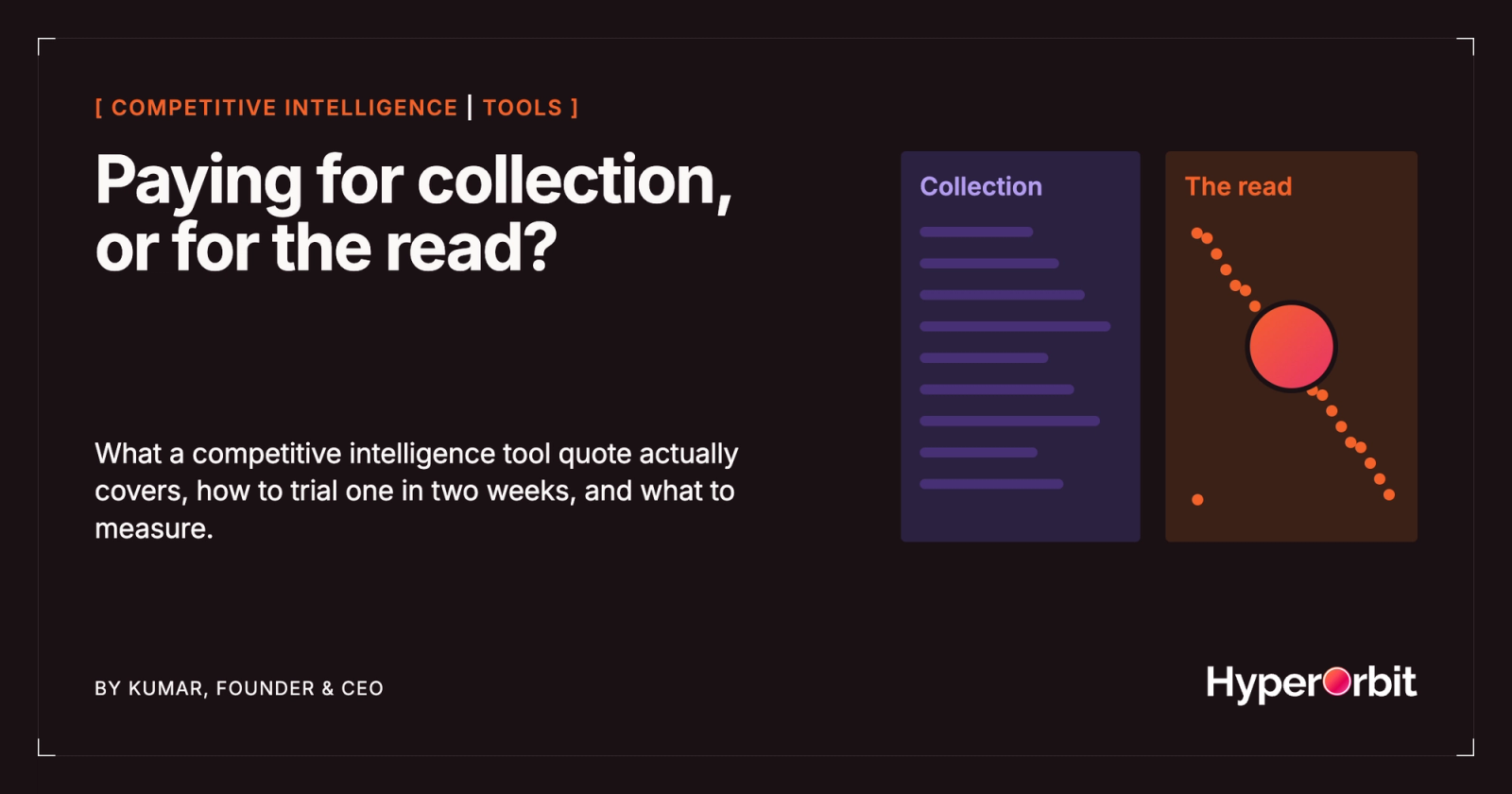
Collection, or the read
Collection is watching competitor sites, pricing pages, changelogs, reviews, job posts, news and ads, and telling you when something changed. This is what most of the tool market sells, from free alert services to enterprise monitoring platforms. Coverage is the differentiator, and coverage is now cheap.
The read is what happens to a change once it is detected: whether it is scored by the pressure it puts on you or by how loud the announcement was; whether it arrives with the accounts it touches and the revenue behind them; whether the counter is drafted or the rep is handed a link. This is where the human hours go in a collection-only tool, and the hours are the real price.
Ask any vendor for two numbers: how many relevant moves the tool surfaced in a trial, and how many minutes of review each one cost before someone could act on it. The second number is the one that decides whether the tool pays for itself.
What a quote should include
- Coverage. Which competitors, which of their sources, how often swept, and what happens when a competitor redesigns its site.
- People. Seats, and whether the price scales with them. Our view is that it should not: intelligence is worth the same whether three people or thirty read it. HyperOrbit prices Enterprise to the sources you connect, never to seats.
- Collection allowance. Pages or checks per month, and the overage. Free tiers typically cap both.
- Delivery. Which tools the intelligence lands in, and whether that costs extra. Enterprise here includes up to five outbound integrations such as Slack, Jira, HubSpot, Intercom and Zendesk.
- Commitment. Annual or monthly, and what happens at renewal.
- The read. Scoring, account attribution, drafted counters, sources cited. If the quote is silent on these, the human hours are yours.
The two-week trial, measured
A demo on the vendor's data proves nothing. Run every candidate on your own competitors for two weeks and count the same four things for each.
- Relevant moves found. Changes that a product marketer or rep would act on. Not alerts; moves.
- False positives and missed events. Alerts nobody cared about, and the move you heard about from a prospect first.
- Review minutes per move. From alert to something a rep could use. This is the price of collection-only tools made visible.
- Accounts touched. For each relevant move, did the tool say which of your accounts had mentioned that competitor and what they are worth? Most cannot, and the trial should say so.
Collection is the line on the quote. The read is the line on your calendar. Total cost is both.
The tool categories, by the job they do
Free alerts and review sites. Layer-one collection at no cost, with all of the read left to you. Right for a founder tracking three competitors.
Website change detection. Reliable on pages you name, blind to everything else. Good as a component, weak as a programme.
Digital and traffic intelligence. Keywords, traffic, ad copy. Valuable for marketing; says nothing about product moves or your accounts.
Aggregators and digests. Curated news in a weekly email. Low effort, low precision, and reads the competitor rather than the customer.
Enablement platforms. Broad monitoring, scoring, battlecards and push delivery to reps. This is the category most teams mean by a competitive intelligence tool, and its metric is adoption, because reps are asked to read content that does not know their accounts. We compare two of the largest on ten dimensions: HyperOrbit and Klue and HyperOrbit and Crayon.
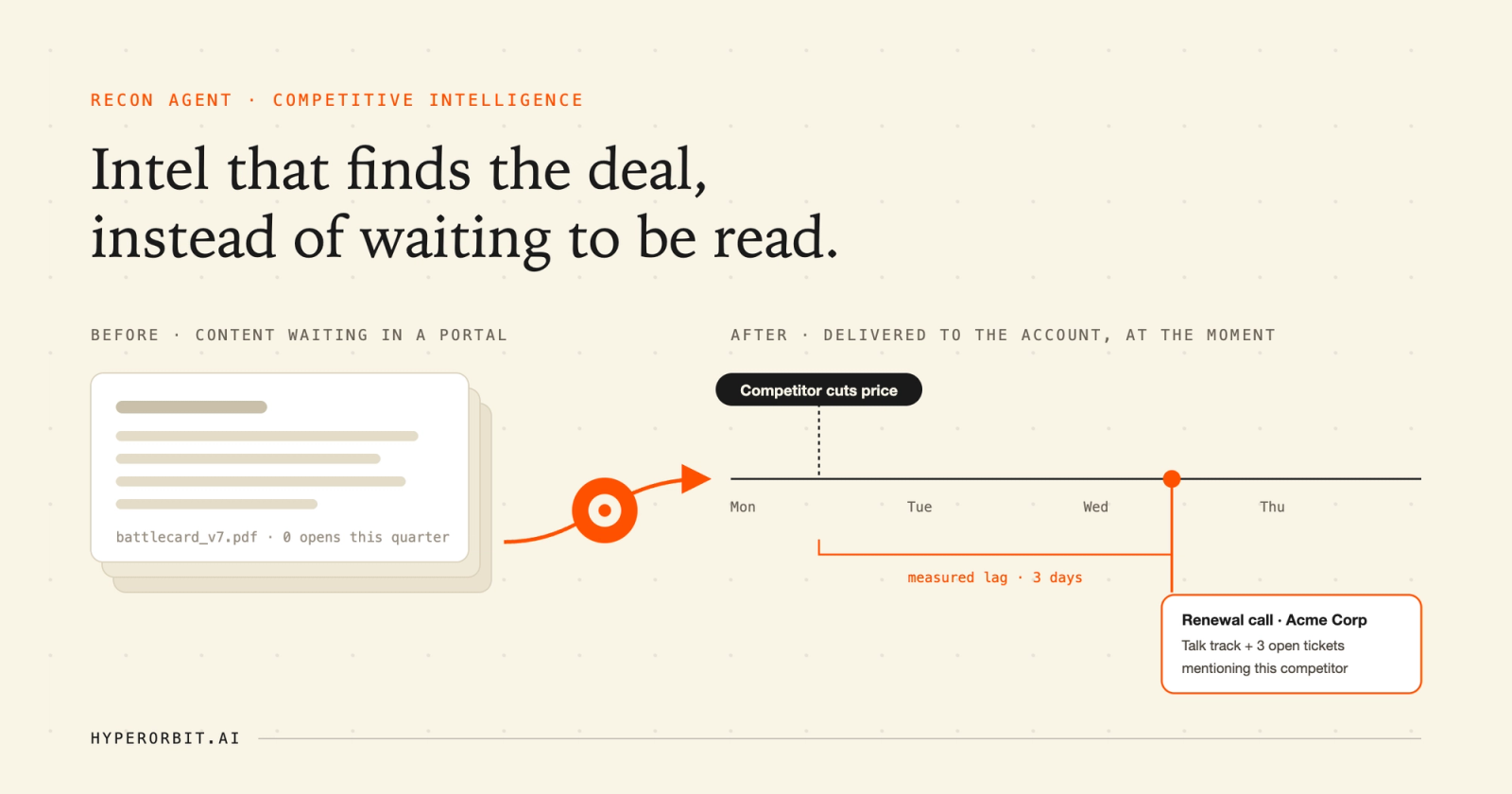
Agents on a shared signal layer. Recon sweeps competitor sites, changelogs, pricing pages and reviews daily, scores each move by pressure, and drafts the counter with the evidence and a confidence score, held for review. Because it shares a signal layer with the agents reading your customer feedback and accounts, every move arrives with the reaction and the ARR attached. The read is the product; collection is what feeds it.
When free or DIY is enough
A handful of competitors, one owner with time, no need to attach revenue to a move, and a channel as the only delivery you need. That describes a lot of early teams, and for them a spreadsheet, alerts and a review site are the right tools. We say so in more detail in build or buy competitive intelligence. Run the DIY setup beside a free read on the same competitor: Starter puts Recon on one competitor source at no cost, with 10 signals and 3 insights a month, and the comparison costs a connection.
Comparing the candidates
Score each tool on the four trial numbers, the six quote lines, and one more question: can it show one competitor move from last quarter with the accounts it touched and what the owner did next? A tool built around content will answer with battlecard views. A tool built around the deal will answer with accounts. Our ranked list of competitive intelligence software applies the same dimensions to six tools, and says where each one stops.
Frequently asked questions
What do competitive intelligence tools cost?
Quotes are configuration-specific: coverage, seats, collection allowance, delivery integrations and commitment all move the number. The cost most quotes omit is review time, the hours it takes to turn each alert into something a rep can use.
How should we trial a competitive intelligence tool?
Run every candidate on your own competitors for two weeks and count relevant moves found, false positives and missed events, review minutes per move, and whether each move named the accounts it touched and what they are worth.
Should competitive intelligence tools be priced per seat?
We think not. Intelligence is worth the same whether three people or thirty read it. Pricing to the sources connected keeps the incentive on coverage and the read rather than on limiting who can see it.
When is a free or DIY competitive intelligence setup enough?
When you track a handful of competitors, one person owns the watch, nobody needs revenue attached to a move, and a channel is enough delivery. Run it beside a free read on the same competitor to check.