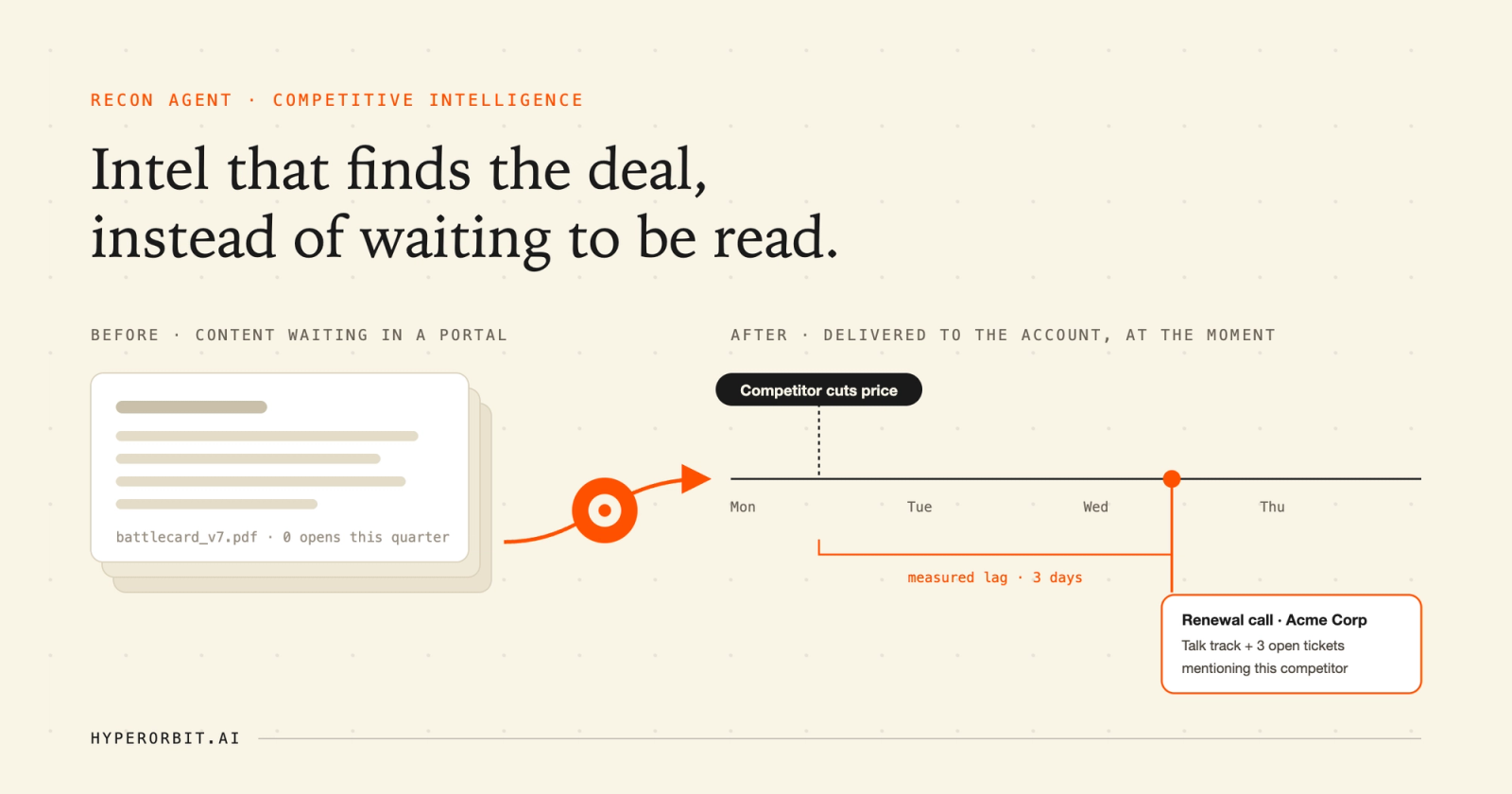
The build-versus-buy question in competitive intelligence is back, and for a good reason. A language model, a scraper and a Slack channel now get a product marketer a passable competitor monitor in a weekend. Vendors in the competitive enablement category have responded with the case for buying: a home-built tool misses sources, drowns the team in unranked noise, and waits for reps to come and ask. All of that is true. It is also an argument about the wrong layer.
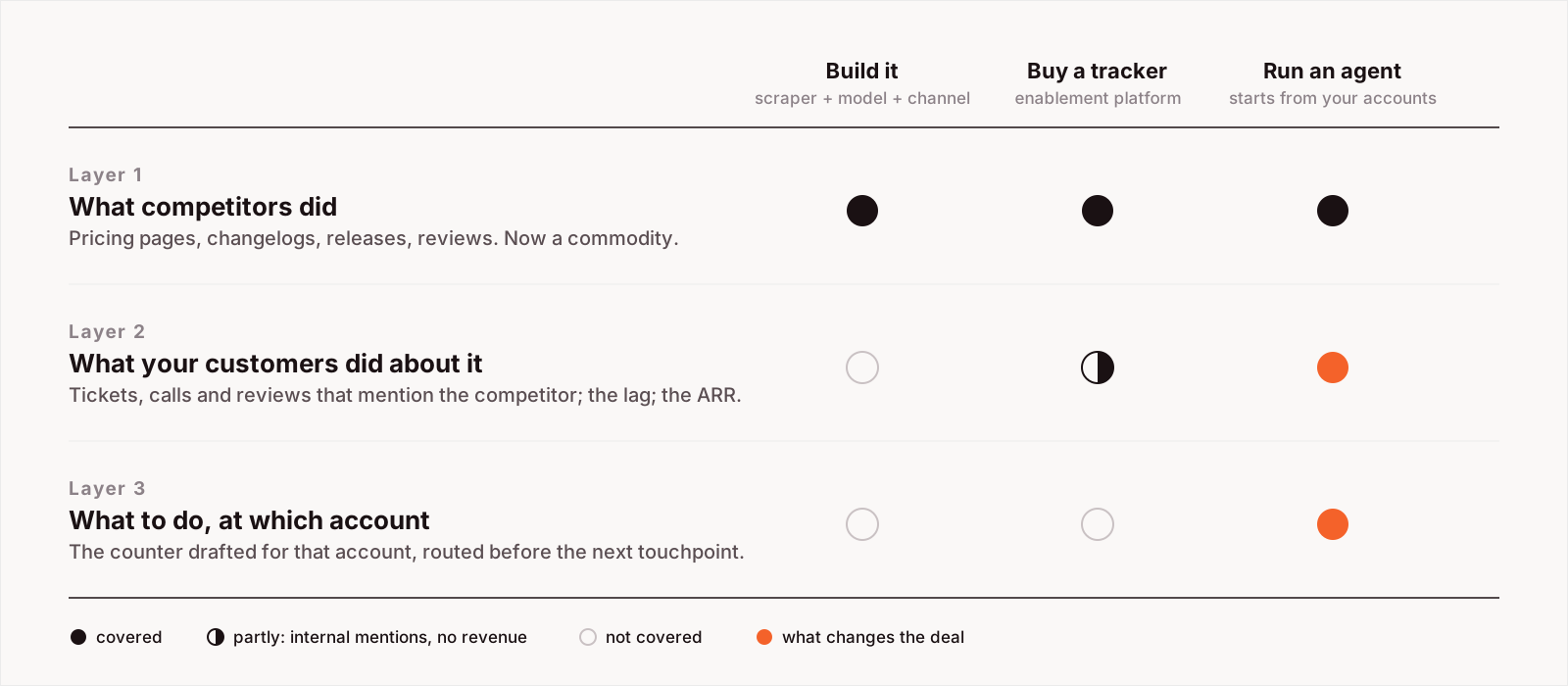
We think the decision splits more usefully by what the tool has to know than by who writes the code. Collecting what competitors did is one layer, and it is now cheap however you get it. Knowing what your own customers did about it is a different layer, and knowing what to do at which account is a third. Only the third changes a deal. Neither the weekend build nor most of the platforms you would buy reach it.
What building gets you today
Be honest about how good the DIY option has become. A script that watches pricing pages, changelogs and release notes, a model that summarises the diff, and a channel where the summaries land: that is a working competitor monitor, and for a team tracking three competitors with one owner it is often enough for a year.
The cost shows up later, as maintenance. A competitor redesigns its site and the selectors break quietly. The summariser starts calling every release "significant" because nobody tuned the prompt again. The person who built it changes teams, and the monitor becomes a channel nobody reads, which is where the DIY argument against building usually starts. The failure is not that the tool was home-made. It is that collection was the whole product.
What buying usually gets you
A competitive tracking platform solves collection and distribution properly. Broader coverage, deduplication, importance scoring, battlecards that stay current, a morning digest, and delivery into Slack, Teams or the CRM so that reps do not have to go looking. If your problem is that nobody sees the intel, this is a real fix.
It is still content about competitors. The platform knows that a rival cut its price. It does not know that four of your accounts up for renewal this quarter have mentioned that rival in tickets since, or which of them are worth the most. The rep gets a better battlecard, faster, and still has to map it onto the account in front of them. That mapping is the work that goes undone, and a distribution layer cannot do it, because the information it needs is not in the platform.
The layer both options miss
The meaning of a competitor move is in your own signal, not on the competitor's website. Which accounts mentioned the competitor after the move, how long the reaction took, and how much revenue sits behind it. That is what turns a news item into a priority.
Here is the shape of it, from the worked example on our methodology page. RingCentral launched a free tier on 22 May. Eight days later, pricing complaints in the customer feedback were up by 31 mentions, across accounts worth $214K of ARR, with the link between the two scored at 68% confidence. A scraper cannot produce that line, and neither can a tracking platform, because neither reads your tickets, calls, reviews and CRM. The move is only half the record.
A different way to split the decision
Layer one: what competitors did. Pricing, packaging, releases, funding, positioning. Build it or buy it; the difference is coverage and upkeep, not kind.
Layer two: what your customers did about it. Support tickets, call notes and reviews that mention the competitor, the lag between the move and the reaction, and the ARR the reaction touches. This needs your feedback sources and your CRM, read continuously, with the same customer recognised across all of them.
Layer three: what to do, at which account. The counter drafted in the context of that account's open issues, routed to its owner before the next touchpoint, and the battlecard updated as a by-product. This needs both layers below it, plus a path into the tools where the work happens.
Ask which layer your current tool, built or bought, stops at. Almost every one stops at layer one and calls the rest enablement.
Collecting competitor moves is a commodity now. Knowing what your customers did about them is not, and it is the only part that tells a rep what to do.
When building is the right call
Building is the right answer more often than vendors admit. It fits when:
- You track a handful of competitors and one person owns the watch.
- Nobody is asking you to attach revenue to a competitor move, and no renewal depends on the answer.
- A channel is enough delivery, because the people who need the intel are the people reading the channel.
- You want to learn what a good move looks like before you pay anyone to score it for you.
One way to keep yourself honest is to run the build beside a free read. HyperOrbit's Starter plan puts Recon on one competitor source at no cost, with 10 signals and 3 insights a month. Point both at the same competitor for a month and compare what each one told you, and what you did about it.
When to buy, and what to buy
Buy when the reaction matters more than the move: when renewals, expansions and competitive deals turn on whether a rep knew, in time, which accounts a competitor move had touched. At that point the question is not build or buy but what the tool reads. Some questions that separate a tracker from an agent:
- Does it read our own tickets, calls, reviews and CRM, or only the competitor's footprint?
- When it flags a move, does it attach the accounts that reacted and the ARR behind them?
- Is each move scored by the pressure it puts on us, or by how loud the announcement was?
- Does it draft the counter for a specific account and hold it for review, or publish a generic card?
- Where does the brief land, and does it get there before the next conversation with that account?
Recon, HyperOrbit's competitive intelligence agent, is built for the third layer. It sweeps competitor sites, changelogs, pricing pages and reviews every day, scores each move by the pressure it puts on you, and drafts the battlecard with the evidence and a confidence score, held for your review. Because it shares one signal layer with Chorus, which reads your customer feedback, and Atlas, which watches accounts, every move arrives with the customer reaction and the revenue attached, and you can see the lag between them in Cause and Effect. Enterprise tracks up to five competitors across sources and delivers into Slack, Jira, HubSpot, Intercom or Zendesk.
If you are weighing a tracking platform, the HyperOrbit and Crayon comparison sets both out on the same ten dimensions. Or book a demo and bring one competitor move from last quarter. We will show you which of your accounts it touched.
The build-versus-buy debate is a debate about layer one. Decide on layer three.
Frequently asked questions
Should we build our own competitive intelligence tool?
Build when you track a handful of competitors, one person owns the watch, nobody needs revenue attached to a move, and a channel is enough delivery. Expect maintenance: broken scrapers, prompt drift and ownership changes are what usually kill a home-built monitor.
What does a competitive enablement platform add over a DIY tool?
Broader coverage, deduplication, importance scoring, current battlecards and delivery into Slack, Teams or the CRM. It solves collection and distribution. It still produces content about competitors rather than about your accounts.
What do both building and buying miss?
What your own customers did about the move: which accounts mentioned the competitor afterwards, how long the reaction took and how much ARR sits behind it. That needs your feedback sources and CRM read continuously, which neither a scraper nor a tracking platform does.
How is HyperOrbit different from a competitive tracking platform?
Recon sweeps competitor sites, changelogs, pricing pages and reviews daily and scores each move, like a tracker. Unlike a tracker, it shares one signal layer with the agents that read your customer feedback and accounts, so every move arrives with the customer reaction, the lag and the revenue attached, and the counter is drafted for the affected account and held for review.