Every SaaS product team has more good ideas than quarters. The roadmap argument is rarely about whether a request is reasonable. It is about which reasonable request goes first, and that argument is usually settled by whoever has the loudest customer, the most recent escalation or the most senior title in the room.
Voice of customer software exists to replace that argument with evidence. Not by producing more feedback, which the team already has too much of, but by turning the feedback into a ranked list with the reasons attached: what customers are asking for, how many, which accounts, what those accounts are worth, and what happens if nothing is done. Here is how that changes prioritisation in practice.
The prioritisation problem, stated honestly
Frameworks such as reach, impact, confidence and effort are only as good as the numbers you put in them. Reach is a guess when feedback is scattered across tickets, calls and reviews. Impact is a guess when nobody knows which accounts raised the request. Confidence is a feeling when the evidence is three quotes someone remembers. The framework is fine. The inputs are the problem, and they are the inputs VoC software is built to supply.
What the software puts on the table
Themes by intent, not requests by wording. Customers ask for the same thing in fifty ways. Chorus groups a hundred pieces of feedback into eight themes and thirty-five sub-themes by what customers are trying to do, so "exports time out" and "I cannot get my data into Snowflake" land in the same place, with a mention count and every quote behind it.
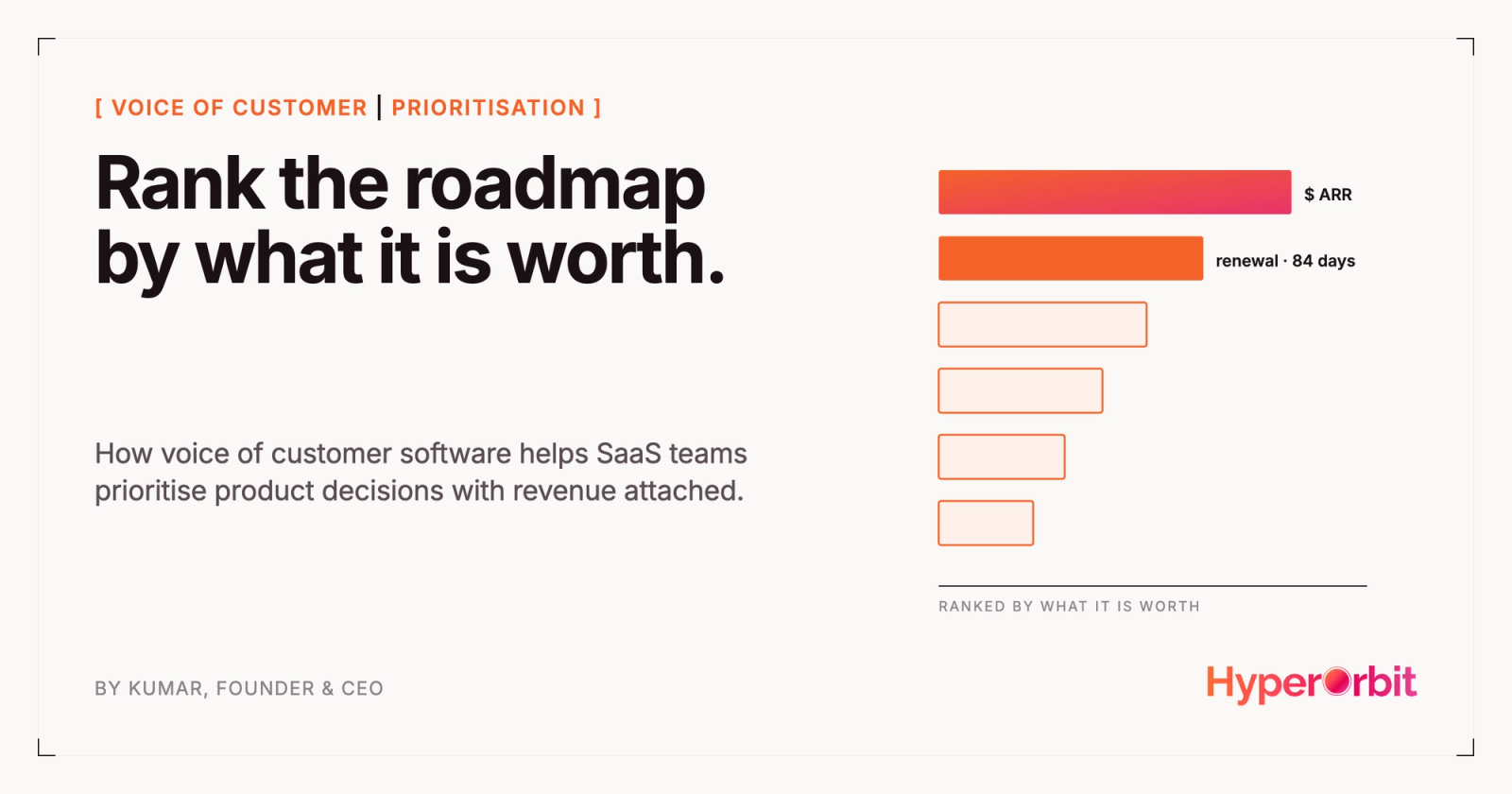
The accounts, and what they are worth. Each theme is joined to the CRM, so it carries the ARR of the accounts that raised it and how close they are to renewal. A theme raised by three enterprise accounts renewing next quarter outranks one raised by fifty on the free tier, whatever the mention counts say. This is the number that ends the loudest-customer argument.
Sentiment per aspect. Not one score per review but a score for each part of the product mentioned, so the team can see that sentiment on exports fell after a release while everything else held.
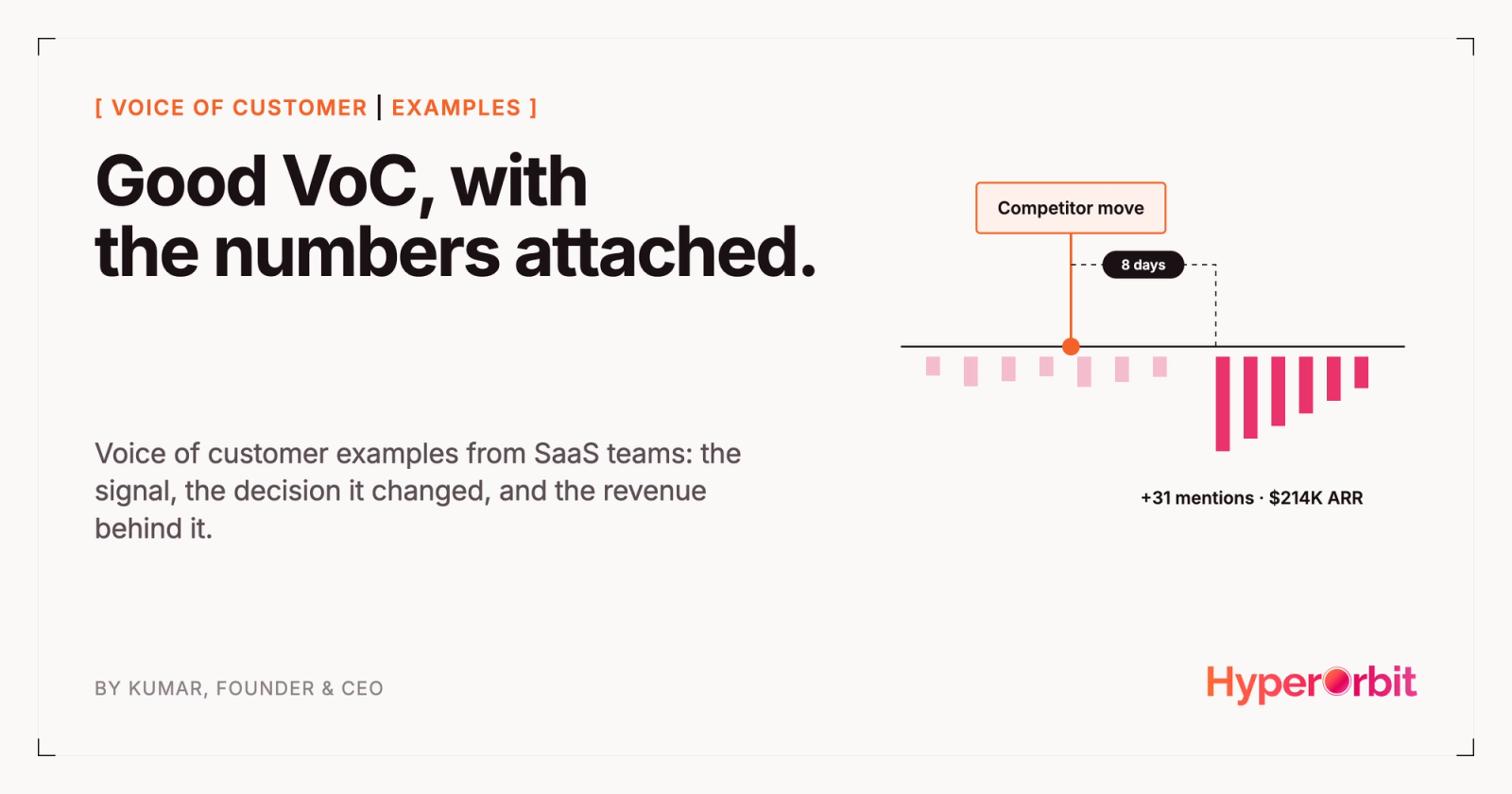
The cause. A spike in pricing complaints is a different priority if a competitor launched a free tier eight days earlier. Cause and Effect puts competitor moves above the timeline and customer reactions below it, with the lag measured, so the theme arrives with its reason.
The fix, drafted. For each ranked theme the agent drafts the fix with the evidence and a confidence score, held for the product manager to accept, edit or reject. The PM still decides. What they no longer do is assemble the case.
A prioritisation pass, start to finish
- Overnight, the read finds that a sub-theme under Integrations has grown, and the accounts behind it are worth more than any other theme this month, with two renewals inside ninety days.
- The theme lands in the Signal Desk with the quotes, the ARR, the renewal dates, the competitor context and a drafted fix, addressed to the owning PM.
- The PM reads the evidence in minutes, adjusts the scope, and accepts. The ticket lands in Jira with the sources attached, and the account owners get the note for their next call.
- The roadmap review the following week starts from a ranked list with revenue on every row. The argument is about sequencing and effort, which is the argument a roadmap review should be about.
A roadmap item should be able to name the themes that justified it, the accounts behind them and the ARR at stake. If it cannot, it was prioritised by volume or by voice.
What it changes for the team
- Product stops defending priorities with anecdotes and starts presenting them with accounts and revenue. The roadmap prioritisation page shows the ranking as the team sees it.
- Customer success sees which roadmap items protect which renewals, and can tell an account what is coming before the renewal call.
- Leadership gets a roadmap that reads as a revenue plan, because every line carries the ARR it touches.
- Customers get told what changed because of what they said, which is the part of prioritisation most teams skip.
Keeping the human in the decision
None of this hands the roadmap to a model. In Supervised mode the agent prepares the case and a person approves it; routine items can move to Autopilot later, and anything touching pricing or a near renewal is always held. The autonomy modes are set per agent, so a team can start cautiously and loosen as the read earns trust.
Choosing software that can do this
Most feedback tools stop at themes and counts. Before you buy, ask the vendor to show a theme with the ARR behind it, the renewal dates of the accounts, a competitor move on the same timeline, and a drafted fix with its sources. We listed the features that matter in a separate guide. If you want to see the ranking on your own feedback first, Starter runs Chorus on one feedback source at no cost, with 50 signals and 10 insights a month.
Frequently asked questions
How does voice of customer software help prioritise a roadmap?
It groups feedback into themes by intent, joins each theme to the accounts that raised it and their ARR and renewal dates, adds the competitor move that caused a change, and drafts the fix with sources, so the roadmap review starts from a ranked list with revenue on every row.
Why is ranking feedback by volume a problem?
Volume measures who talks, not who pays. A theme raised by fifty free-tier users can outrank one raised by three enterprise accounts up for renewal. Ranking by the ARR and renewal proximity behind a theme fixes that.
Does the software decide the roadmap?
No. The agent prepares the case and a person approves it. In Supervised mode every fix is held for the product manager; routine items can later move to Autopilot, and anything touching pricing or a near renewal is always held.
What should a SaaS team ask a VoC vendor about prioritisation?
To show one theme with the ARR behind it, the renewal dates of the affected accounts, a competitor move on the same timeline, and a drafted fix that cites its sources.