Manual overload
Product managers spend their week reading tickets, reviews and surveys by hand, and still can't keep up with the volume.
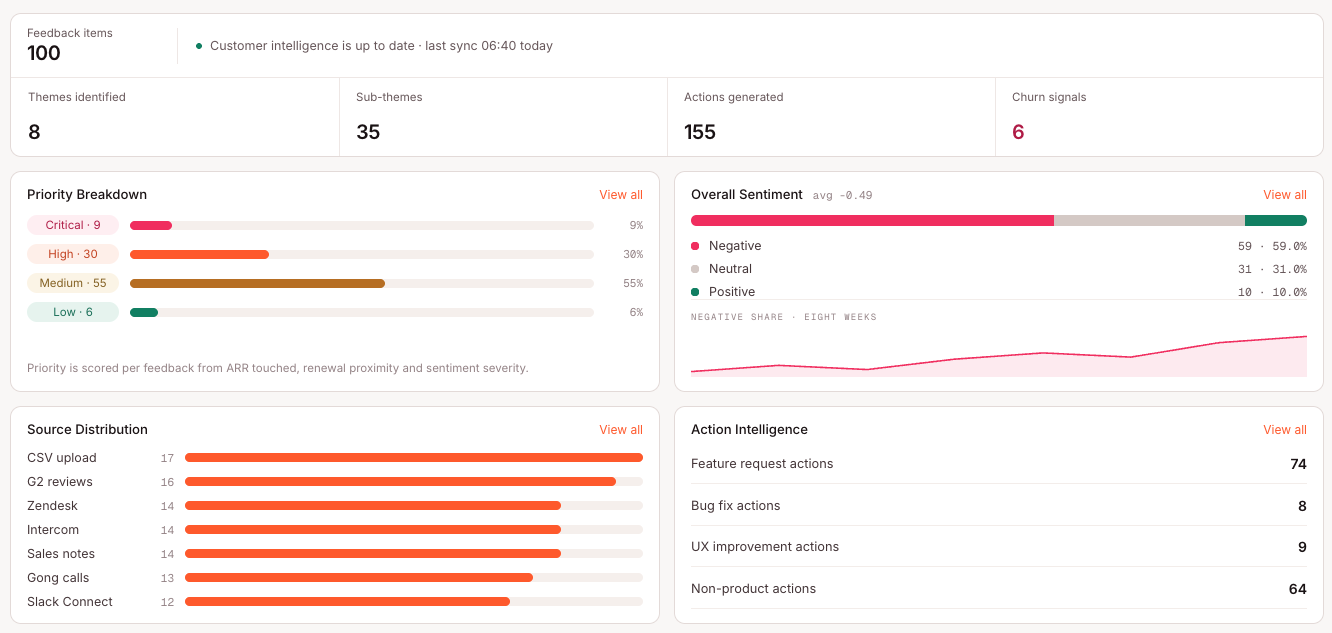
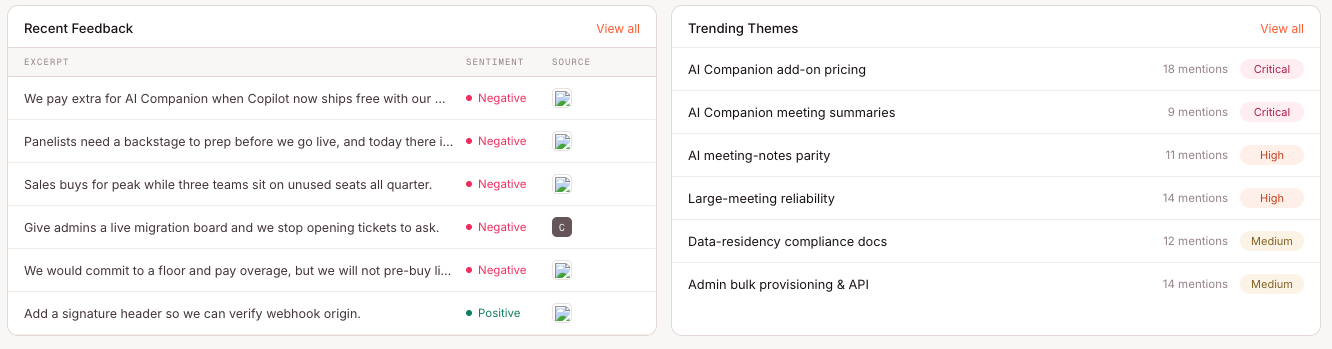
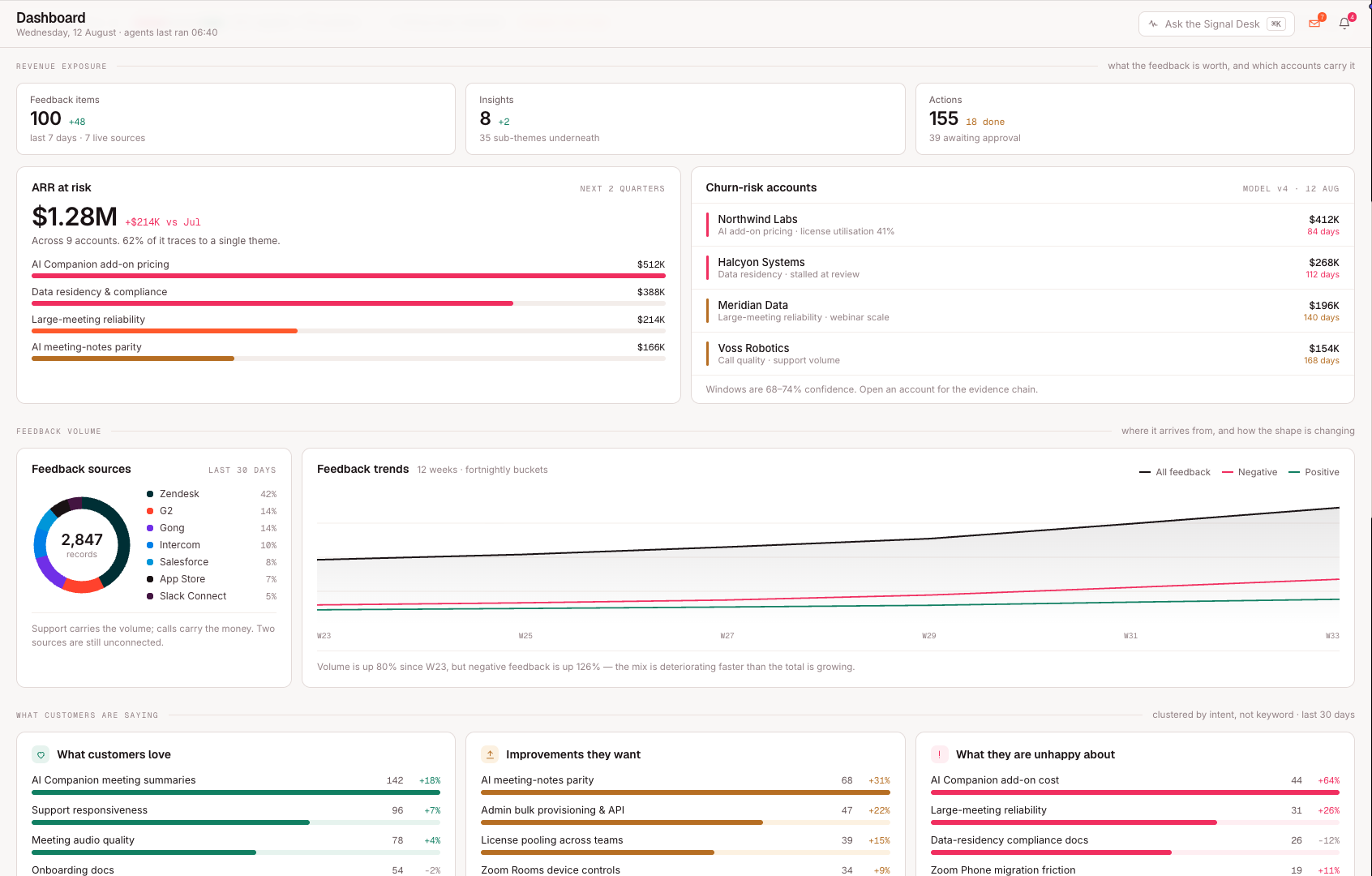
Chorus reads every review, ticket, call and survey as it lands, clusters it into themes by intent, and drafts the requirement with the quotes and the ARR behind it.
Product managers spend their week reading tickets, reviews and surveys by hand, and still can't keep up with the volume.
Voices live in Zendesk, Intercom, Gong, G2, surveys, app reviews and forums. No unified read.
By the time feedback reaches the product team, the account, the quote and the urgency are gone.
Support tickets, call transcripts, reviews, surveys, community and social, through 76 connectors.
Similar requests merge across channels, duplicates collapse, and each theme gets sentiment, urgency and segment.
User stories with acceptance criteria, affected segments and demand by volume and value.
What rose and fell this cycle, by mentions, with sub-themes.
Every theme priced against the accounts that raised it.
Which segments want what, so the roadmap reflects revenue, not volume.
Every count links back to the record it came from.
One problem filed forty ways becomes one theme.
Let Chorus suggest, wait for approval, or act within limits.
Six of the 76 connectors this surface reads from. Each connects once over OAuth and is read continuously.
 Zendesk SupportConnected
 IntercomConnected
 G2Connected
 GongConnected
 TypeformConnected
 App StoreConnected
A feedback tool stores and tags. Chorus reads, clusters by intent, prices each theme against ARR and drafts the requirement, then Recon and Atlas add the cause and the accounts.
Yes. Themes can be mapped to your categories, and Chorus proposes new sub-themes when the data warrants them.
Most connectors: 5 to 10 minutes over OAuth. Custom enterprise sources: 2 to 3 weeks with a dedicated engineer.
Act on anything touching pricing or an account inside its renewal window. Those stop and ask, in every autonomy mode.
Connect your first source in an afternoon. The first pass lands before your next standup.
Book a demo