

8 Minutes
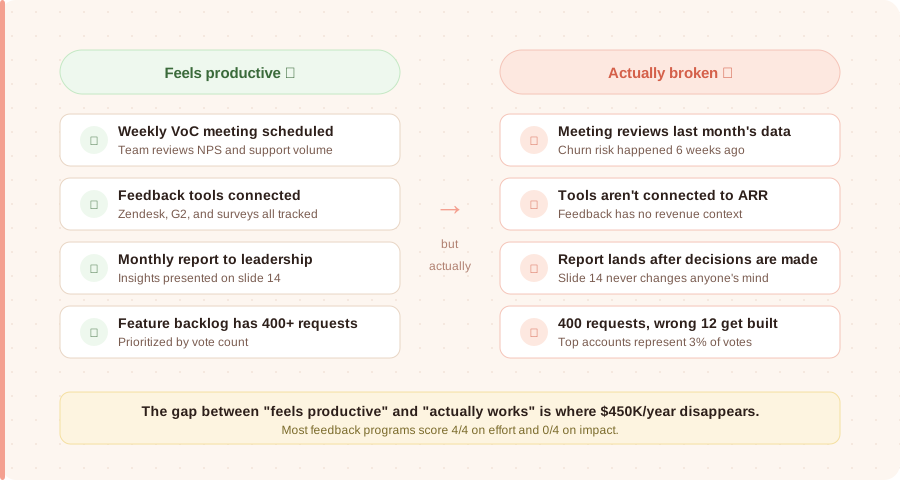
Your feedback program feels productive. Weekly syncs. Quarterly NPS reports. A Zendesk queue someone checks on Fridays. The process exists. The data exists.
But your product roadmap still gets hijacked by whoever spoke loudest in the last meeting. Customers you thought were happy disappear at renewal. Features you shipped based on "customer demand" land flat.
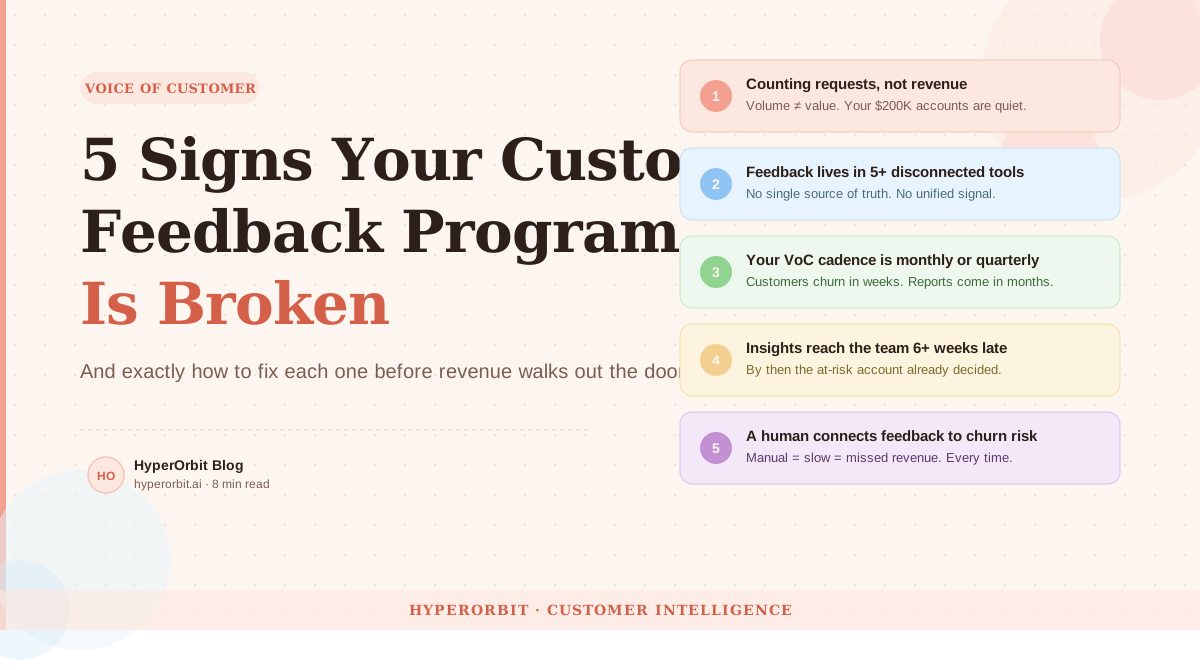
The problem isn't effort. It's architecture. Here are the five signs your feedback program is structurally broken — and what fixing each one actually looks like.
Sign 1: You're counting requests, not weighting them by revenue
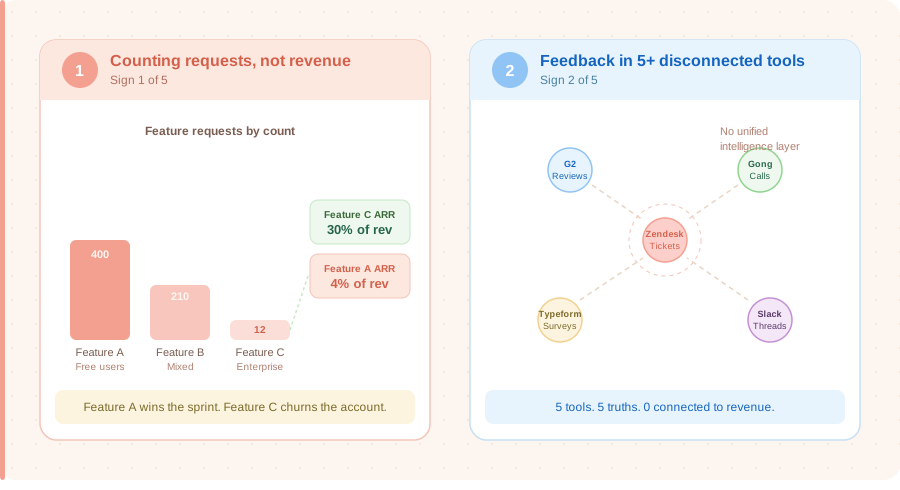
Your backlog has 400 votes for Feature A and 12 for Feature B. Feature A wins the sprint. But those 12 requests for Feature B came from enterprise accounts representing 40% of your ARR — two of them renewing next quarter.
Volume is not signal. It's noise with good PR.
A feedback program that treats a free-tier user's request identically to a $120K ARR account's request isn't a program — it's a popularity contest. The fix isn't more data. It's connecting every piece of feedback to the economic context behind it: ARR, segment, renewal date, expansion potential.
When you weight feedback by revenue, the priority list reshuffles dramatically. Features that crowd the top by raw count drop. Problems that barely register by volume surface to where they actually belong.
Sign 2: Feedback lives in 5+ tools with no single source of truth
Support tickets in Zendesk. Sales calls in Gong. Product feedback in a Notion doc someone stopped updating. App store reviews nobody reads. NPS responses in a spreadsheet from last quarter.
Every channel tells a different story. Product, CS, and sales each walk into planning with different data — and different conclusions. The team with the most compelling anecdote wins, not the team with the most critical problem.
A unified feedback layer isn't a nice-to-have. It's the prerequisite for any intelligence to happen at all. Until every signal comes from one place, you're not running a feedback program — you're running five disconnected listening posts that never talk to each other.
Sign 3: Your feedback cadence is monthly or quarterly — not real-time
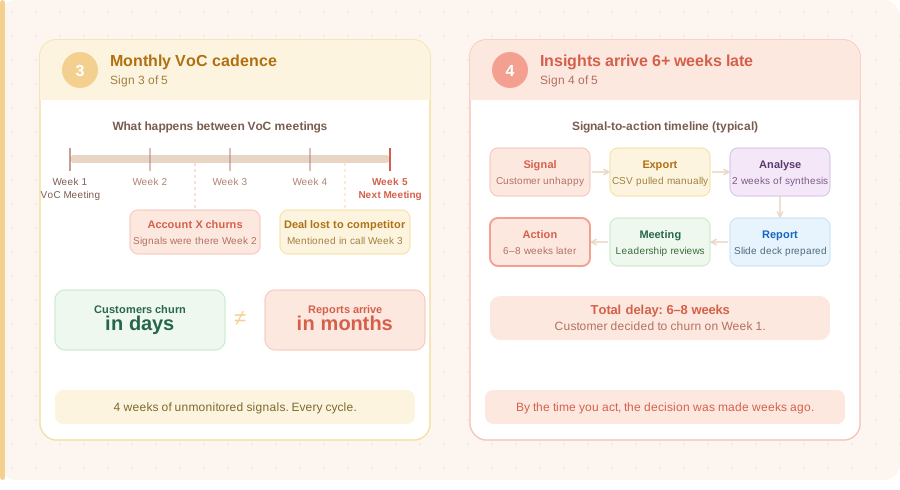
A customer starts showing dissatisfaction signals in week one. Your team reviews feedback in week five. By week eight, they've already decided to leave. By week twelve, you find out in the churn interview.
Monthly reports are too slow for teams shipping weekly. Quarterly VoC reviews are relics from a world where software moved at a different pace.
The gap between when a customer signal appears and when your team sees it isn't an inconvenience — it's the window where preventable churn happens. Closing that gap from weeks to hours is the single highest-leverage change most feedback programs can make.
Sign 4: Insights reach the team six or more weeks after the signal
Even teams with good data collection fail here. The data exists. But it's sitting in a tool someone has to log into, run a query on, export to a spreadsheet, summarise in a slide, present in a meeting, and turn into a ticket — before anyone acts.
That process takes four to six weeks on a good day. During those weeks, at-risk accounts are evaluating alternatives. Competitive threats are going unaddressed. Product decisions are being made on signals that are already stale.
Intelligence that lives in a dashboard you have to visit will always lose to intelligence that comes to you, automatically, when it matters.
Sign 5: You need a human in the loop to connect feedback to action
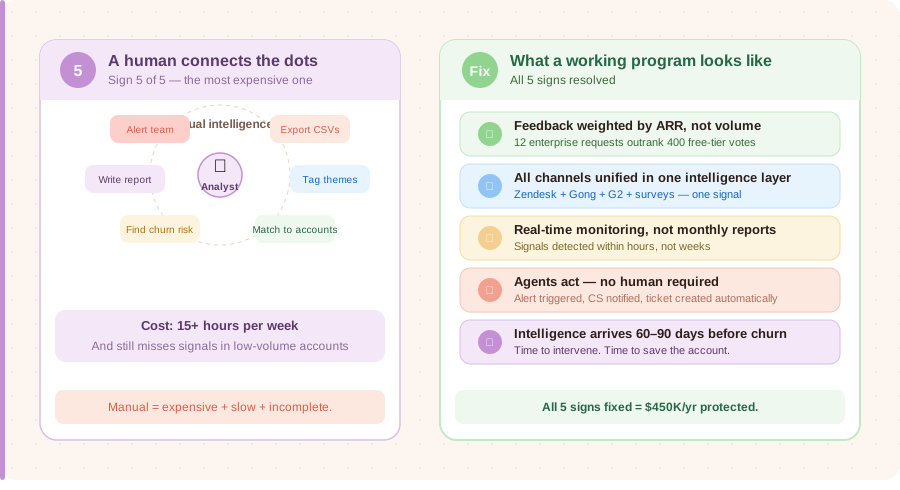
This is the clearest sign of a broken program: nothing happens unless someone decides it should.
A support ticket mentioning a competitor gets filed, resolved, and forgotten. An NPS comment predicting churn sits in a spreadsheet no one checks. A Gong call where a customer says "we're evaluating other options" goes unescalated because the AE is focused on new business.
A feedback program that depends on human judgment at every step will always have gaps. Humans get busy. Humans miss things. Humans aren't monitoring 50 channels simultaneously at 3am.
The fix isn't more humans. It's a system that catches the signal regardless of who's watching.
What a fixed feedback program looks like
A functioning customer feedback program in 2026 does four things automatically:
Aggregates every signal from every channel into one place — continuously, not on a schedule
Weights every insight by the revenue and risk behind the account that generated it
Predicts which signals indicate churn or expansion 60–90 days before they materialise
Acts — alerting the right person, creating the right ticket, updating the right record — without waiting to be asked
If your program does all four, it's working. If it requires a human to initiate any of those steps, you have work to do.
Conclusion
How broken is your program?
The Customer Intelligence Maturity Assessment takes five minutes and scores your feedback program across five dimensions — signal coverage, revenue weighting, cadence, speed-to-insight, and automation depth.
Most teams score lower than they expect. The ones who score lowest are usually the ones most convinced their program is fine.
Find out where you actually are — and exactly what to fix first.