
We're building the operating system for customer intelligence
The way companies understand customers is undergoing its biggest transformation since CRM. Static dashboards are becoming autonomous agents. Reactive analysis is becoming predictive intelligence. Manual workflows are becoming self-executing systems.
HyperOrbit isn't just better customer feedback software. We're defining what comes next.
question
The strategic question
Customer intelligence evolution
The Category-Defining Difference
Most companies collect customer feedback. The best companies act on it—before opportunities vanish. HyperOrbit is the autonomous intelligence that turns customer signals into decisions that protect revenue.
3 Waves of customer intelligence
The Third Wave of Customer Intelligence
The way companies understand customers is undergoing its biggest transformation since CRM. Static dashboards → Autonomous agents. Reactive analysis → Predictive intelligence. Manual workflows → Self-executing systems.
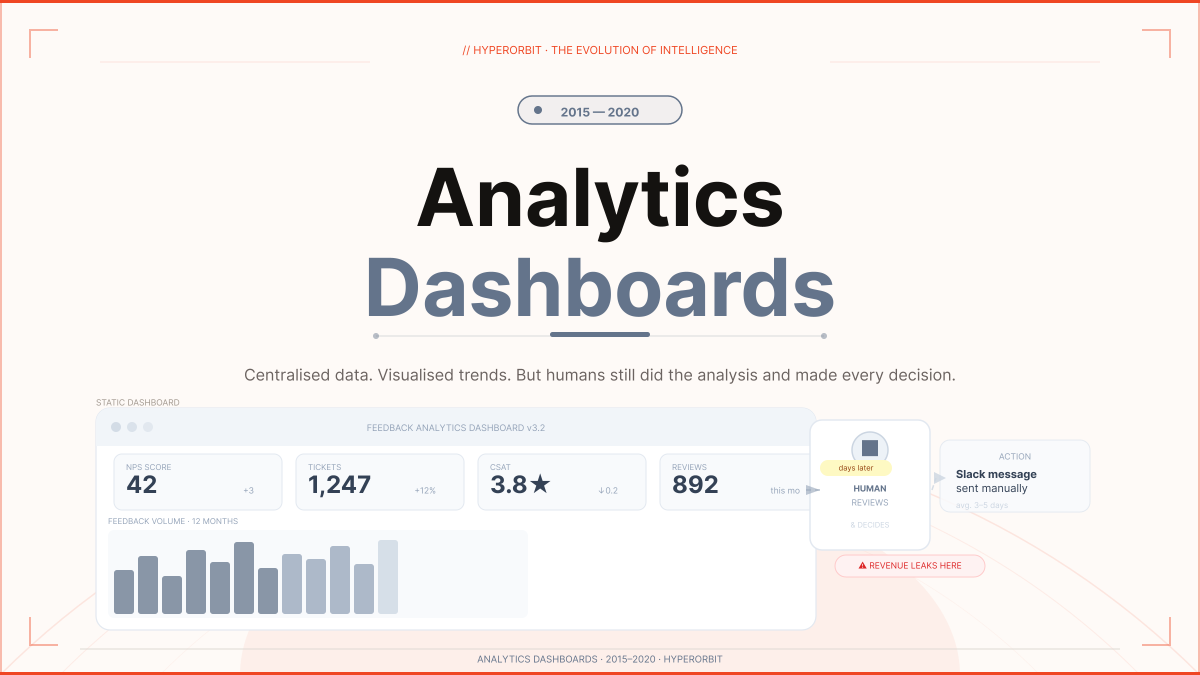
GEN 1
Analytics Dashboards
(2015-2020)
Revolutionary for their time—they centralized feedback, visualized trends, made data accessible. But they stopped at insights. Humans still did the analysis. Teams still made the decisions. Revenue still leaked through manual processes.
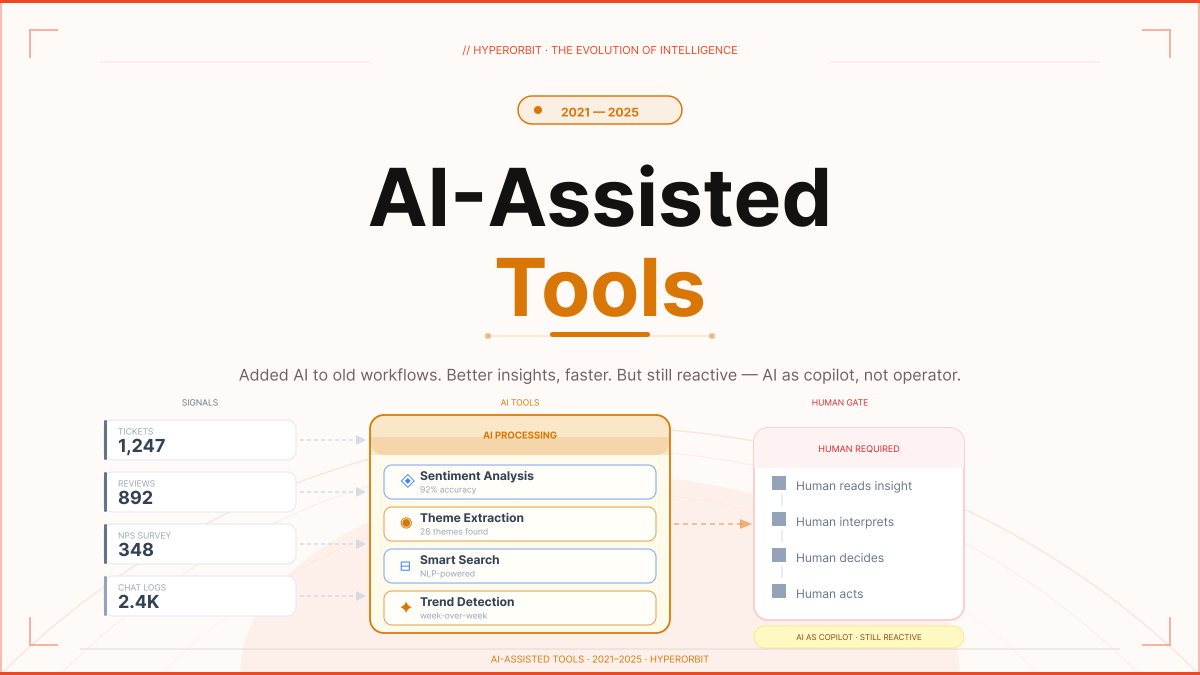
GEN 2
AI-Assisted Tools
(2021-2025)
Added AI to old workflows. Sentiment analysis. Theme extraction. Smart search. Better insights, faster. But still fundamentally reactive. Still requiring humans to prompt, interpret, and act. AI as copilot, not autonomous operator.
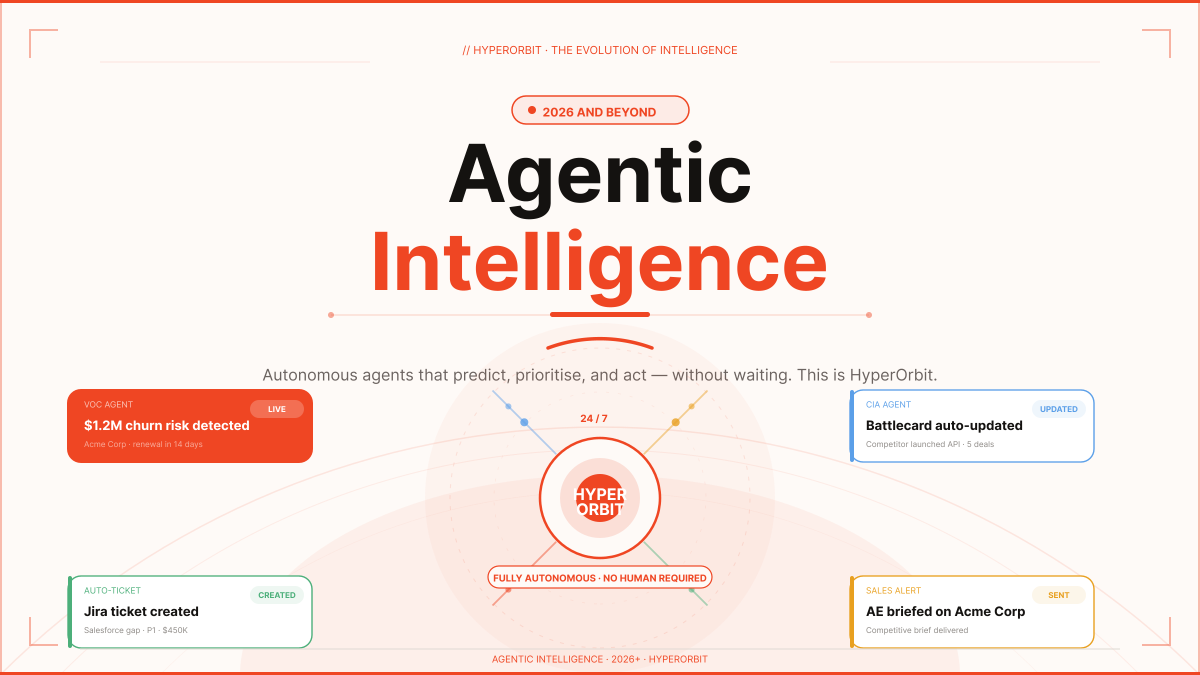
GEN 3
Agentic Intelligence
(2026+)
This is HyperOrbit: autonomous agents that predict, prioritize, and act—without waiting. The VoC Agent spots a $1.2M churn risk before your renewal call. The CIA Agent updates battlecards the moment a competitor moves. Intelligence that works while you sleep.
HYPERORBIT MANIFESTO
Why Autonomous Agents Will Define the Next Decade
Modern SaaS companies generate 12+ customer touchpoints per account daily. Support tickets. Usage logs. Sales calls. Sentiment signals. Product feedback. Competitive mentions. That's 4,380 data points per customer per year. For a company with 500 customers, that's 2.19 million signals annually.
No human team—no matter how sophisticated—can process that in real-time and still execute strategy.
This is why 89% of customer insights never drive action. Not because teams don't care. Because human bandwidth is the bottleneck. Traditional tools just moved the bottleneck from data collection to data interpretation.
HyperOrbit eliminates the bottleneck entirely.
Our multi-agent architecture processes every signal continuously, learns behavioral patterns autonomously, predicts outcomes probabilistically, and triggers interventions automatically. The system doesn't augment human decision-making—it operates as an autonomous intelligence layer that never stops, never misses a pattern, never lets revenue slip away.
60-90 day advance churn prediction. 89% accuracy. $450K average revenue protected per customer. These aren't benchmarks—they're proof points that autonomous intelligence has arrived.
Revenue Protection as a System, Not a Process
Here's what most companies miss: Customer intelligence isn't a reporting problem. It's a systems architecture problem.
Traditional approach: Collect → Analyze → Meet → Decide → Act
Timeline: 6-8 weeks
Revenue risk: High
HyperOrbit approach: Agents monitor → Agents predict → Agents act → Humans approve high-impact decisions
Timeline: Real-time to 24 hours
Revenue protected: Automatic
When a customer exhibits churn indicators, our system doesn't send an alert for someone to investigate later. It instantly cross-references product usage patterns, support sentiment, competitive intelligence, and renewal probability—then automatically generates intervention playbooks, creates Success tasks, and updates Product roadmaps with revenue-prioritized features that could save the account.
This is the future. Revenue protection that operates as a continuous system, not a quarterly fire drill.
25% churn reduction in 90 days isn't a metric—it's what happens when intelligence moves at machine speed instead of meeting speed.
💡 The Bottom Line
The question isn't whether autonomous agents will replace manual customer analysis.
The question is: Will you deploy them before your competitors do?
$450K average revenue protected per customer. 89% churn prediction accuracy. 25% churn reduction in 90 days.
These aren't projections. These are results from teams already operating in the future.
Market Opportunity
Category-Defining Market Opportunity
Three Markets Converging into One
autonomous intelligence
What Autonomous Intelligence Looks Like
No meetings. No manual synthesis. No revenue lost to decision latency.